
Have you ever hired a roofer, plumber, or painter who gave you a quote and the final cost matched very closely?
That sounds familiar, right?
Now, you might be wondering why a general contractor estimate doesn’t work the same way. Why can a roofer give you a relatively accurate number, but when you call Matrix Construction for a full renovation, the number isn’t always exact, and sometimes change orders come up midway through the project?
Let’s talk about that. This is one of the most common (and important) questions we get from clients, and it’s time to clear up the confusion once and for all.
What Makes a Single-Trade Estimate Simpler
When you hire someone for a single trade, like a roof repair, plumbing fix, or flooring job, there’s usually one clear task to complete.
A roofer might charge you based on square footage and shingles. A plumber might charge you for replacing a water heater.
Even then, it’s not always 100% accurate (no one knows what’s under the roof sheathing until it’s opened up), but it’s easier to stay close to the original price because the scope is narrow, the variables are limited, and one trade handles the entire job.
Now multiply that by ten or more trades: roofing, plumbing, electrical, HVAC, drywall, painting, flooring, carpentry, masonry, and you’ll start to see why a general contractor estimate can’t be perfectly precise.
Why a General Contractor Estimate Is More Complex
When you hire a general contractor like Matrix Construction, you’re hiring someone to manage all those trades, coordinate schedules, ensure code compliance, and make sure everything works together. If you’ve ever wondered why a general contractor estimate sometimes changes once a project starts, you’re not alone. Almost every client asks this question at some point. Here are the real reasons why, the ones we see every day on job sites.
1. Hidden Conditions
Until we open up a wall, ceiling, or floor, we don’t really know what’s hiding in there. You might have beautiful drywall on the outside, but behind it could be rotted studs, damaged insulation, old wiring, or unpermitted work.
When the demo starts, we sometimes uncover surprises that no one could see during the estimate. That’s why part of every general contractor estimate includes a contingency; it protects you and us when the unknown becomes visible.
For example, look at the picture below. During the field visit, we noticed two holes near the refrigerator. At first, it looked like a simple drywall patch. But once we opened up the wall, we discovered extensive hidden damage: eight joists had to be replaced due to rot, and one beam also needed sistering. That added a significant amount of unexpected cost, and there was no way to detect that during the initial field visit.
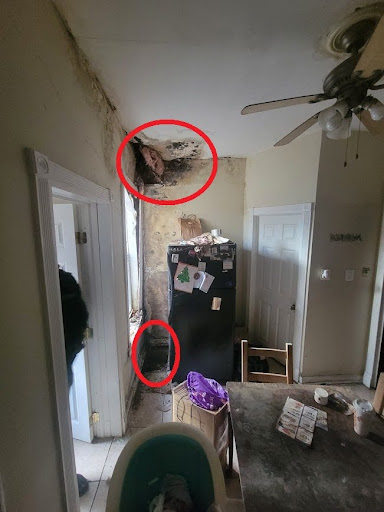
Figure 1
Another example: in Figure 2, you can see a bedroom on the second floor. When we opened the wall, we found a completely deteriorated brick wall that was damp and, unbelievably, had a tree branch growing inside it. There was no possible way to see that from the outside. We had to remove the branch, take down the damaged brickwork, and rebuild the entire wall from scratch.
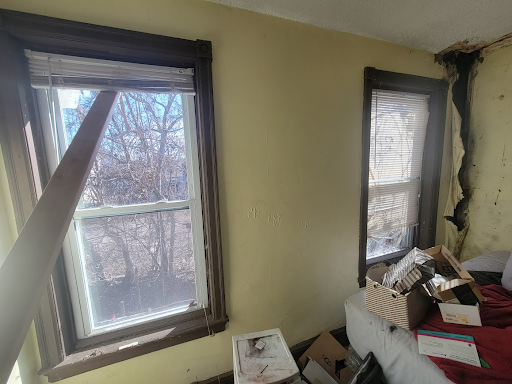
Figure 2
2. Code Upgrades
Another reason your estimate might shift is the building code. When we open or replace something, inspectors often require that area to meet current standards.
For example, an old bathroom might not have a vent fan, but now it must. A staircase might need different railing spacing. Electrical outlets might require GFCI protection. These upgrades aren’t “extras”, they’re required by law once the space is opened. We can’t know all of them ahead of time until the inspector reviews the work.
For example, in one project, we had a small bathroom where the door originally opened outward. That design was fine years ago, since the code at the time didn’t require otherwise. However, the current building code requires the bathroom door to open inward. During the redesign and layout phase, we found that there wasn’t enough space to do that with the existing layout, so we had to completely redesign the space to make it code-compliant.
Also, building codes can change during the construction process compared to when the project was first estimated. Large projects often take six to nine months to complete, so it’s not uncommon for code updates to occur in that time frame.
For example, under the 2017 electrical code, outlets could be installed on the side of a kitchen island. However, the 2023 electrical code now requires outlets to be placed either on the wall or on the countertop. For kitchen islands, that means the only compliant option is installing a pop-up outlet in the countertop; a fixture that’s more expensive and more difficult to install, especially when the countertop is made of stone like granite.
Even though Philadelphia currently still uses the 2017 code and a side-mounted outlet would technically pass inspection, we chose to follow the 2023 standard, knowing that the city will likely adopt it soon.
3. Client Changes
Let’s be honest, sometimes you change your mind, and that’s okay. Maybe halfway through framing, you decide you’d rather have a bigger shower, different tile, or recessed lights instead of a ceiling fixture. These changes are part of the creative process, but they naturally affect cost. Materials, layouts, and labor shift, and that leads to a change order. We always discuss those changes with you before moving forward.
For example, the Bristol Street project was a low-budget job, and the client understood from the beginning that luxury fixtures were not included. When we provided the color and fixture selection report for the bathroom, the client requested a high-end shower system that was much more expensive than what was budgeted. Even the most affordable version of his choice was still above the original allowance, which increased the cost.
Later in the same project, the client changed his mind again, first selecting only a shower, then midway through construction deciding to add a bathtub. That change also resulted in additional costs.
4. Limited Access During the Estimate
Many times, when we come to give a general contractor estimate, the home is still occupied or full of furniture or storage boxes. That’s totally normal, but it can block us from seeing every corner. If a large sectional blocks a wall, we can’t check for cracks or damage behind it. If a basement is packed, we can’t see plumbing lines clearly. We estimate based on what we can access, but sometimes, once we start clearing things out, new conditions appear. That’s why we always suggest clearing the house and then calling us for a field visit.
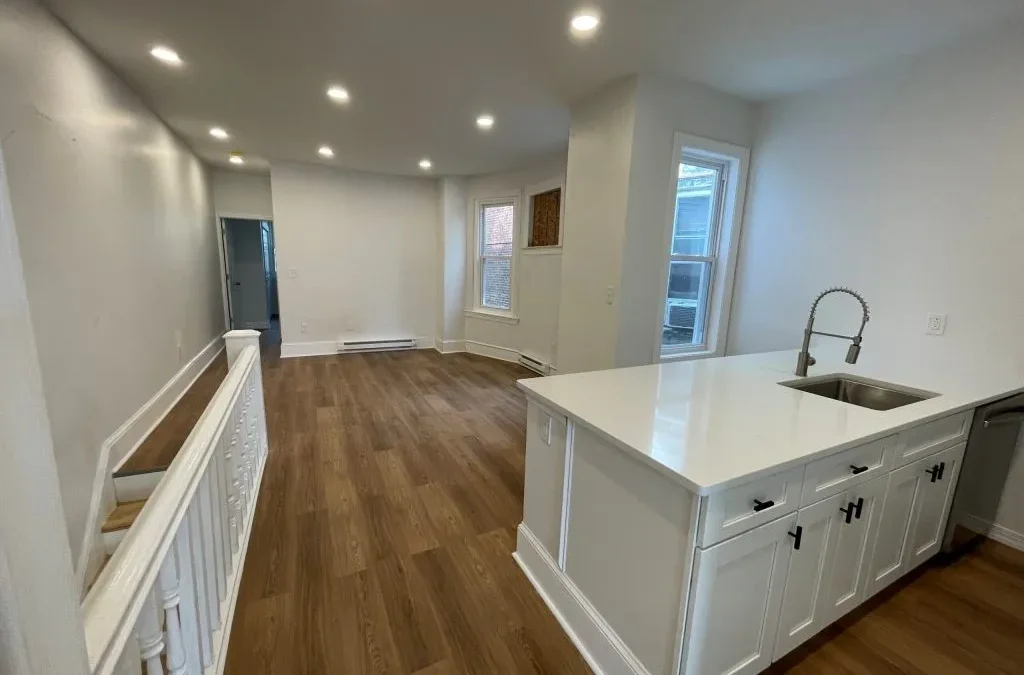
For example, the Bristol Street property was completely filled with debris and junk during the initial visit, making it impossible to see or assess all the existing conditions in detail.
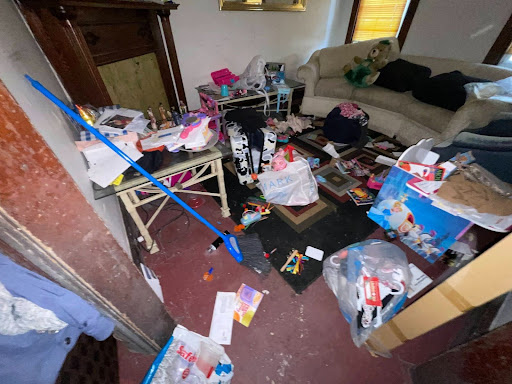
Figure 3
5. Time Constraints During the Field Visit
It’s just not realistic to spend hours taking things apart during an estimate visit. We can’t cut into walls, pull up floors, or remove fixtures just to check behind them. Some discoveries only happen once we begin construction. We balance being thorough with being respectful of your home and time, but that means the general contractor estimate is still partly based on assumptions that can’t be verified yet.
6. Material and Labor Market Changes
Construction pricing moves fast. Material costs for lumber, copper, drywall, cabinets, and tile can fluctuate monthly. Labor availability can shift, too, especially during peak construction seasons. We always price based on current market rates, but if a construction delay happens (read more about construction delays here) before you start, pricing may need an update. It’s not that the estimate was wrong; it’s that the market changed.
For example, in recent months, inflation in the U.S. has significantly affected material and labor costs. At the time we prepared one project estimate, LVP flooring was priced around $1.80–$1.90 per sq. ft., but by the time construction began, the cost had risen to $2.60 per sq. ft.
Similarly, one of our subcontractors who previously charged $900 to install ceramic tile in a bathroom of the same size increased his price to $1,400 just two months later.
7. Permit and Inspection Requirements
Once your project goes into permitting, the city or township might request revisions. Inspectors can require extra bracing, blocking, or different materials. We don’t control these changes, but we are responsible for following them. They’re a normal part of any permitted renovation, and they can affect both cost and timeline.
8. Multiple Trades Working Together
A big difference between a roofer’s estimate and a general contractor’s estimate is coordination. When one trade changes something, it affects another. Moving plumbing might mean reframing a wall. Framing changes might shift drywall seams. Drywall affects paint timing. Each trade is connected. When one moves, the others do too. That’s the beauty and the complexity of general contracting; it’s not one job, it’s ten trades working together.
9. Compatibility With Existing Systems
Let’s say we’re tying new PEX plumbing into old copper lines or connecting a new HVAC unit to older ductwork; sometimes they don’t match perfectly. We might need special fittings, upgrades, or adjustments to make old and new work together safely. These issues can’t always be identified before installation starts.
10. Site Logistics and Access Challenges
Every property has its own quirks. Maybe your street doesn’t allow daytime parking, or you live in a condo with strict working hours, or we’re building in winter and need to heat or tent the area. Those logistics affect labor hours and setup time. We account for typical conditions, but when site access is limited, it can add time and cost.
We try to see and plan for everything during the walkthrough, but we can’t open every wall or test every wire before starting. That’s just the reality of construction.
So, while we work to make your estimate as accurate as possible, we also have to plan for what we can’t see yet.
11. New Tasks for a General Contractor
Every project comes with its own unique challenges and upgrades, which is something I fully understand. A single-trade contractor, like an electrician, usually performs the same type of work repeatedly. While each building may have its own small complexities, its overall scope remains consistent.
But for a general contractor, it’s completely different. Most of our clients aren’t just asking for simple repairs; they want a fresh, new look and a transformed space. To deliver that, we sometimes need to come up with creative solutions and perform tasks that are unique to each house, sometimes doing things that have never been done before. Naturally, that introduces unknown factors and unexpected costs along the way.
The Role of Architectural Drawings
For larger projects, like full home renovations, structural changes, additions, or anything that touches load-bearing elements, having architectural drawings makes a huge difference in the accuracy of a general contractor’s estimate.
At Matrix, we have professional in-house designers who help you plan the look, feel, layout, and finishes of your space. They’re fantastic at bringing your vision to life with functional layouts, selections, and 3D visuals. But for big jobs, a certified architect is different and essential. An architect produces permit-ready drawings, stamps plans when required, coordinates structural engineering, and defines technical details such as framing, clearances, and mechanical layouts that directly impact cost.
Architectural drawings reduce assumptions. They lock in dimensions, assemblies, and specifications so your general contractor estimate is based on facts, not guesses. They save time and surprises by translating design into measurable reality, reducing revisions and inspection delays. And when our design team works hand-in-hand with your architect, you get the best of both worlds: design creativity and technical accuracy.
Without plans, we have to rely on typical construction methods and allowances, which naturally adds a margin of uncertainty. That’s why for bigger scopes, we always recommend bringing a certified architect into the team.
Understanding Contingency
In every major renovation project, we include something called a contingency, and this is where some confusion happens.
Contingency isn’t a “hidden fee” or a “maybe we’ll spend it” amount. It’s simply a safety cushion for unforeseen issues that we discover once construction begins.
Here are a few common examples:
- We open a ceiling and find hidden water damage.
- Old wiring or plumbing doesn’t meet current code.
- We find termite damage behind a wall.
- Furniture, clutter, or old finishes prevented full visibility during the walkthrough.
- Or sometimes, the client changes their mind mid-project.
Even 203k loans, which are designed for major home renovations, automatically include a 15% contingency because lenders know estimates can’t be exact.
And the same logic applies even outside of loan projects. We always recommend setting aside a contingency budget. Whether it’s a small bathroom remodel or a full gut renovation, having a contingency helps you stay prepared for the unexpected instead of being caught off guard by surprise costs.
That doesn’t mean you’ll always have unforeseen expenses or that the contingency will automatically be used. If everything goes according to plan, you can choose to use that extra budget for optional upgrades or cosmetic improvements, or simply not spend it at all.
The Key Differences Between a General Contractor Estimate and a Single-Trade Quote
| Aspect | Single-Trade Estimate | General Contractor Estimate |
| Scope of Work | One specific task (e.g., roofing, plumbing) | Multiple trades and coordination across the entire project |
| Unknown Conditions | Limited to one area | Spread across the entire property like walls, systems, and structures |
| Complexity | Straightforward, simple pricing | Layered pricing involving multiple trades and permits |
| Accuracy | Often close to the final cost | Realistic, but can’t be 100% precise due to unknowns |
| Responsibility | One trade executes one task | GC manages the entire project, including subcontractors and compliance |
| Changes & Adjustments | Rare unless scope changes | More common; adjustments due to hidden issues, design updates, or code changes |
So, when you receive a general contractor estimate, remember, it’s not that we “don’t know” the costs. It’s that we’re working with hundreds of moving parts that interact with each other.
That’s why accuracy in a GC estimate isn’t about hitting one exact number; it’s about setting a realistic, well-planned range with room for contingencies.
What Matrix Construction Does to Stay Accurate
At Matrix Construction, we take pride in being as precise as possible while staying transparent with our clients.
Here’s how we do it:
- Detailed initial walkthroughs to identify as many conditions as possible
- Asking the right questions about your goals and design vision: This step is extremely important. We take the time to ask detailed questions about both your goals and any problems in the house, things like leaks, unusual sounds inside the walls, or areas that have been previously repaired. Understanding whether you’ve ever fixed or upgraded anything in the home before helps us identify hidden issues and design a plan that truly fits your needs.
- Recommending architectural plans for larger projects
- Providing 3D visualizations before construction begins
- Communicating clearly about any change orders before proceeding
We know how frustrating surprises can be; that’s why we always explain the “why” behind every cost change.
Our job isn’t just to build, it’s to guide you confidently through the process.
(If you haven’t read it yet, check out The Matrix Construction Renovation Process; it walks you through every step from your first call to your key ceremony day.)
The Bottom Line
A general contractor estimate isn’t meant to be a promise of a fixed number; it’s a roadmap built on what we can see, supported by contingency for what we can’t.
Our goal at Matrix Construction isn’t to give you a “perfect” number on paper. It’s to give you an honest one, and then stand by you with full communication and professionalism when something unexpected comes up.
Because in the end, a renovation isn’t just about construction, it’s about trust, teamwork, and transparency.
FAQs
1. Why can’t a general contractor estimate be 100% accurate?
Because no contractor can see behind walls or under floors before work begins. Unknown conditions, design changes, and city code updates all affect final pricing.
2. What is a contingency, and do I really need one?
Yes! Contingency is a safety cushion for unforeseen issues. Even banks (like with 203k loans) require it because they know construction always has unknowns.
3. What happens if my project cost goes over the estimate?
Before any additional work is done, we’ll issue a change order explaining the reason, cost, and scope. Nothing happens without your approval.
4. How can I make my estimate more accurate?
Provide clear design plans, architectural drawings, and access to the property (decluttered spaces help). The more we can see, the better we can price.
5. Does Matrix Construction guarantee transparency?
Always. We believe honesty builds trust. We explain every number, every change, and every step, that’s part of the Matrix Construction promise.
Planning a project in Philadelphia or South Jersey?
MatrixGC is a licensed Philadelphia general contractor (#43984). Learn about our whole-home renovations, see Philadelphia general contractor, or get a free estimate. Call (215) 501-7566.





0 Comments