
Many people dream of building their own home—picturing freedom, savings, and the satisfaction of saying “I built this.” But before diving into permits and lumber, there’s a more important question:
Should you build it yourself?
And in South Jersey, the answer depends on realities most new owner‑builders don’t see coming.
1. The Real Question: Should You Build It Yourself?
Building a home is not the same as managing a kitchen remodel or watching home‑renovation videos. A new construction project is a complex mix of logistics, code compliance, budgeting, subcontractor management, and timing. So rather than asking “Can I do it?” the smarter question is “Should I take this on—and what will it really demand of me?”
1.1 What People Think Owner‑Building Is vs. Reality
The fantasy version:
- You hire a few trades
- You order materials
- Everything lines up smoothly
- You pocket a big chunk of “general contractor savings”
- The project finishes on-time and under budget
The real version:
- Subcontractors put paying builders ahead of owner‑builders
- Scheduling delays domino into more delays
- Inspectors require fixes you didn’t plan for
- Costs creep as materials change and availability fluctuates
- You spend nights coordinating trades, tracking invoices, and solving problems
- Every mistake—big or small—comes out of your pocket
Owner-building isn’t impossible. But it is a huge project-management job with real financial and legal consequences.
1.2 Who Typically Succeeds (and Who Fails)
People who usually succeed:
- Those with construction or project‑management experience
- People comfortable reading plans, permits, and code requirements
- Highly organized personalities
- Owners with flexible work schedules (or the ability to be on-site often)
- People who already have reputable subcontractor connections
People who usually struggle:
- Full‑time workers who can’t pause to meet inspectors or trades
- Anyone expecting HGTV‑style simplicity
- People who dislike conflict (you will have to push trades to stay on schedule)
- Anyone without contingency budget—unexpected costs are guaranteed
- Folks who rely on “the cheapest contractor” strategy
Owner‑building is less about hammer skills and more about coordination, communication, and problem‑solving under pressure.
1.3 Why South Jersey Changes the Equation
South Jersey’s rules, markets, and geography make owner‑building different from other parts of the country:
Local permitting can be strict
Municipalities like those in Camden, Burlington, Gloucester, and Atlantic counties can be slow and detail‑oriented. Missing paperwork or unclear drawings can set you back weeks.
Labor availability fluctuates
South Jersey sits between two major metro areas—Philadelphia and the Jersey Shore—so subcontractors often prioritize higher-paying builder contracts or seasonal shore work.
Soil, wetlands, and Pinelands regulations matter
Certain lots require environmental approvals or additional engineering, especially near wetlands or inside the Pinelands region.
Costs aren’t always predictable
Material and labor prices in South Jersey don’t track national averages. Market swings tied to the shore season can affect availability and bids.
Financing is not always owner‑builder friendly
Many local banks avoid owner‑builder construction loans unless you can document relevant experience.
All of this means that owner‑building is possible—but it’s rarely straightforward.
2. How South Jersey Is Different From Other States
Building a home in South Jersey isn’t the same as building in Arizona, the Carolinas, or even North Jersey. The rules here are layered, hyper‑local, and heavily influenced by municipal interpretation. Two lots that look identical on paper can follow completely different approval paths—and this is where many owner‑builders hit unexpected friction.
2.1 Township‑Driven Approvals (Not Just State Rules)
Most states operate with unified statewide building guidelines. South Jersey technically follows New Jersey’s Uniform Construction Code, but in practice:
Your project is shaped by the township, not the state.
Every township has its own:
- Zoning officer
- Planning board
- Construction office
- Preferences for documentation
- Interpretation of the same state code
That means your approval timeline and requirements are often determined less by NJ state law and more by how your town enforces—sometimes over‑enforces—those laws. What one township green‑lights immediately, another may require engineering revisions, extra documentation, or additional hearings for.
2.2 Variability Between Towns (Brick, Cherry Hill, etc.)
You could drive 20 minutes in South Jersey and cross from one permitting universe into another.
Examples of how towns differ:
- Cherry Hill tends to be thorough and detail‑heavy, with multiple rounds of review.
- Brick is stricter on waterfront and high‑density zones and may require more engineering.
- Gloucester Township may process permits faster but wants clean, complete paperwork upfront.
- Evesham often relies heavily on engineer sign‑offs and will reject incomplete site plans.
- Atlantic City / Downbeach towns can be seasonal, which slows everything around summer.
Even if two towns follow the exact same state code, the workload, staffing, and risk tolerance of each building department means your timeline, required documents, and inspections can look dramatically different.
2.3 Flood Zones, Wetlands, and Coastal Restrictions
South Jersey’s geography introduces another set of hurdles that many owner‑builders underestimate.
Key issues include:
- FEMA Flood Zones (A, AE, V): Elevation requirements, engineered foundations, and flood vents can add cost and complexity.
- Wetlands: A lot that looks dry may still fall under NJDEP wetlands rules requiring permits, buffers, and environmental studies.
- Coastal Areas / CAFRA: Near the shore, your project may need CAFRA approval (Coastal Area Facilities Review Act), which adds a regulatory layer outside of local township control.
- Soil conditions: Certain areas (like parts of Camden and Burlington counties) have clay soils requiring special drainage or foundation engineering.
- Pinelands Commission: If your property touches the Pinelands region, expect an extra approval process with its own environmental restrictions.
These factors can easily add 2–6 months to what would be a straightforward project in another state.
2.4 Why Two Identical Projects Get Different Approvals
A common frustration for owner‑builders in South Jersey is hearing:
“My friend built the exact same house one town over and didn’t need XYZ.”
This happens because:
- Different zoning interpretations: One town might classify your home as an accessory use; another calls it a variance case.
- Staffing differences: Short-staffed offices review slower and push back more.
- Local engineering preferences: Some town engineers require more detailed grading, drainage, or soil reports.
- Flood/soil variations even a mile apart: You may need pile foundations where another doesn’t.
- Different planning board philosophies: Some boards want to protect neighborhood character or limit density, even within permitted uses.
- Risk tolerance of building officials: Some inspectors enforce every line of the code; others are more pragmatic.
In South Jersey, “identical” projects never really are—because the regulatory landscape changes at every township border.
3. The Approval Maze (What Actually Stops Projects)
When people imagine building a home, they usually picture framing, roofing, and picking finishes. In South Jersey, the real battle happens long before a shovel ever hits the ground.
Most stalled projects aren’t stopped by construction problems—they’re stopped by approvals, paperwork, and sequencing mistakes. Understanding the maze upfront is the difference between a smooth build and a year of back‑and‑forth headaches.
3.1 Zoning vs. Construction Approval (Two Separate Hurdles)
One of the biggest surprises for owner‑builders is that zoning approval and construction approval are completely separate.
Zoning approval answers the question:
“Is what you want to build allowed here?”
It controls:
- Setbacks
- Height limits
- Lot coverage
- Use classification
- Easements
- Environmental buffers
Zoning comes before you can even apply for the building permit.
Construction approval answers:
“Is what you’re building safe, code‑compliant, and buildable?”
Construction offices review:
- Architectural plans
- Engineering
- Structural details
- Mechanical, electrical, plumbing
- Energy compliance
- Foundation & grading plans
Even if the town “likes” your project, you still must pass both systems—each with its own staff, timeline, and review process.
This two‑stage structure is where many projects get stuck early.
3.2 Planning Boards and Variances
If your project doesn’t perfectly match zoning rules—and many South Jersey lots don’t—you’ll likely face the planning board or zoning board of adjustment.
Reasons you might need a variance include:
- Lot is undersized
- Setbacks can’t be met
- Height or coverage exceeds limits
- Corner lots with odd layouts
- Existing nonconforming structures
- Wetlands or buffers forcing the home into restricted areas
A variance is not a formality. The board can:
- Approve
- Deny
- Request revisions
- Require additional engineering reports
- Ask for professional testimony (architect/engineer)
- Delay a decision to another meeting
And because boards meet monthly, a single missing document can push you back another 30 days.
This step alone routinely adds 1–4 months to South Jersey projects.
3.3 Utility Sign‑Offs (Water, Sewer, Septic)
Even if zoning and construction both say yes, you still need utility approvals, which are often the silent bottleneck.
Typical requirements:
- Water connection approval (municipal or private utility)
- Sewer connection approval or capacity verification
- Septic design approval (if no sewer)
- Well permits (if no public water)
- Gas and electric service availability
- Utility mark‑outs before construction
Common issues that stall projects:
- The water company is behind on paperwork
- Sewer capacity is restricted (common in older towns)
- Septic designs require revisions after soil tests
- Utility companies have long lead times for new service
A project can be “fully approved” on paper but still be unable to start because a single utility sign‑off hasn’t been issued.
3.4 Timeline Reality: What Delays Projects in NJ
New Jersey is known for slower, more documentation‑heavy approval cycles. In South Jersey specifically, these are the most common causes of long timelines:
- Incomplete applications
If one document is missing, the town often returns the entire packet.
- Overloaded township offices
Some towns have tiny staff reviewing hundreds of permits.
- Engineering revisions
Drainage calculations, grading plans, soil logs, and foundation engineering often require multiple rounds.
- Planning board schedules
Monthly meetings mean any delay equals a month lost.
- Environmental reviews
Wetlands, flood zones, or Pinelands rules can add weeks or months.
- Utility backlog
Water/sewer authorities and gas/electric providers don’t operate on construction office timelines.
- Seasonal slowdowns
Shore towns slow in winter; inland towns slow in summer when staff take vacations.
Realistically, even a “simple” single‑family home often takes:
- 3–6 months for permits and approvals (fast track)
- 6–12 months if variances, utilities, or environmental factors are involved
And that’s before construction even begins.
4. Can You Act as Your Own Builder in New Jersey?
New Jersey does allow homeowners to act as their own builder or general contractor—but the gap between what’s legally allowed and what’s practically possible can be huge. Owner‑building here isn’t impossible, but it comes with responsibilities, expectations, and scrutiny that often surprise people.
4.1 What’s Allowed vs. What’s Practical
What’s allowed:
New Jersey permits homeowners to serve as their own builder on a primary residence. You can submit your own permit applications, hire subcontractors, and manage the entire project.
What’s practical:
Paperwork and approvals are only part of the job. When you act as the builder, you also become responsible for:
- Scheduling every inspection
- Coordinating every trade
- Maintaining a safe site
- Ensuring code compliance
- Managing change orders, delays, and cost overruns
- Making sure work is done in the right sequence
- Solving problems the moment they appear
Many owner‑builders underestimate how much time and decision‑making is required. Legally, you may be allowed to build your own home—but practically, it can feel like taking on a second full‑time job.
4.2 When Towns Push Back on Owner‑Builders
Some South Jersey towns are perfectly fine with owner‑builders. Others treat them with caution. Not because they want to block you—but because they’ve seen self‑managed projects go sideways.
Towns may push back when:
- Plans or paperwork look incomplete
- You can’t answer technical questions about the build
- Your project requires variances or board hearings
- The job involves complex engineering (flood zones, wetlands, coastal, Pinelands)
- Subcontractors are not properly licensed
- There’s a history of stalled owner‑builder jobs in the area
Sometimes the pushback is subtle: extra documentation requests, stricter scrutiny, or slow approvals. Other times it’s explicit: “We strongly recommend hiring a licensed contractor.”
This isn’t personal—it’s risk management. Owner‑builder projects require more hand‑holding and create more liability for the township if something goes wrong.
4.3 The Hidden Responsibility of Being “In Charge”
When you act as your own builder, you take on every responsibility a general contractor normally handles, including the ones people don’t think about:
- If something is built wrong, you’re responsible for tearing it out and paying to redo it
- If a subcontractor doesn’t show up, you’re the one rearranging the schedule
- If an inspector fails the job, it’s on you to figure out why
- If two trades blame each other, you become the referee
- If a worker gets injured, you must have the right insurance to protect yourself
Owner‑builders sometimes think they can “just hire trades” and supervise from a distance. In New Jersey, that almost never works. The township expects someone to own every detail—and if that someone is you, they will hold you to it.
4.4 When You’re Treated Like a Professional Contractor
Here’s the paradox:
You’re not a licensed contractor… but you’ll be treated like one.
Once you sign the paperwork as the owner‑builder, the town sees you as the responsible party. That means:
- Inspectors will expect professional‑level answers
- The construction office will communicate with you, not with your trades
- Scheduling mistakes are on you, not on the subcontractors
- You’ll be expected to understand code, sequencing, and safety
- Missing documents or design flaws come back to you for correction
In practice, many owner‑builders are surprised to learn that acting as the builder doesn’t reduce your stress—it multiplies it. Towns assume you know what you’re doing, even if you don’t.
5. The Smart Way to Start (Before You Spend Money)
The biggest financial mistakes in South Jersey custom homebuilding happen before people hire an architect, apply for permits, or even finalize a design. The land itself determines everything—cost, approvals, engineering, timeline, and whether the house can be built at all.
If you do the right homework up front, you can avoid months of wasted time and thousands in sunk costs.
5.1 Vetting Land the Right Way
Most buyers evaluate land emotionally—“it looks private,” “the price is good,” “it feels right.”
But in South Jersey, land must be vetted technically, not visually.
Smart vetting includes:
- Checking zoning (use, setbacks, lot size requirements)
- Confirming buildable area after wetlands, buffers, and easements
- Verifying flood zone and base flood elevation
- Reviewing township’s required frontage and access rules
- Understanding any HOA or private road restrictions
- Calling the township to confirm whether variances will be required
- Getting preliminary feedback from a local engineer (often inexpensive)
A lot that looks perfect may not be buildable.
A lot that looks average may be ideal if the zoning is clean.
This is where many owner‑builders either save or lose thousands.
5.2 Red Flags: Lots You Should Avoid
Certain lots in South Jersey are notorious money traps. Red flags include:
- Wetlands anywhere on or near the property
Even small wetlands can trigger 50–150 foot buffers. This kills many “cheap” lots. - Flag lots or panhandle lots
Townships often restrict these or require extra approvals. - Private roads or easements shared with neighbors
Can create legal headaches and access disputes. - Lots below minimum size for the zoning district
Variances aren’t guaranteed. - Properties requiring CAFRA approval
Common near the coast—slow and expensive. - Lots with no sewer or water access
Drilling wells and building septic systems adds cost and risk. - Fill material or disturbed soil
Requires engineered foundations.
If any of these appear, walk away or get very detailed pre‑checks before going further.
5.3 Soil Tests, Drainage, and Elevation Issues
South Jersey’s geology varies wildly from sandy soil to dense clay. That’s why soil and drainage issues can make or break a project.
Key tests and checks include:
- Perc tests (for septic designs)
- Soil borings (to determine foundation type)
- Topographic survey (shows slopes and drainage patterns)
- Drainage requirements (some towns require full engineering)
Common issues that increase costs:
- Clay soils requiring deeper or reinforced foundations
- Standing water that forces drainage basins or French drains
- Poor percolation requiring larger or alternative septic systems
- Low elevations requiring additional fill or raised foundations
- FEMA flood zone elevations increasing foundation height
Soil = money.
Drainage = money.
Elevation = money.
Doing these checks early prevents massive surprises later.
5.4 Access, Utilities, and Cost Traps
Many “cheap” lots become expensive once you add the real cost of bringing utilities or access to the site.
Watch out for:
- Long driveways
You may need engineered drainage, stormwater plans, or easements. - No natural gas on the street
Running a gas main can cost 10k–10k–10k–30k—if the utility agrees. - Sewer too far away
Extending sewer lines or installing a pump system adds major cost. - Power poles on the wrong side of the street
You pay for trenching or overhead service extensions. - Public water at capacity
Some towns require capacity letters or even system upgrades. - No legal access (landlocked or questionable easements)
You cannot obtain permits until legal access is resolved.
Access and utilities are often the reason a “great deal” on land stays unsold.
6. Designing for Approval (Not Just Looks)
Most people design a home based on what they want it to look like.
But in South Jersey, a beautiful design that violates zoning or engineering rules will never be approved, no matter how much you love it.
The smartest homeowners design strategically—for approval first, aesthetics second—so they don’t waste months and thousands of dollars on drawings that can’t be built.
6.1 Why Design Mistakes Kill Projects Early
Common early-stage design mistakes include:
- Creating a footprint that violates setbacks
- Designing too much house for the lot
- Exceeding height limits (especially in flood zones or coastal towns)
- Ignoring drainage requirements
- Placing garages or porches where they don’t fit
- Designing a home that requires unnecessary variances
- Not understanding buildable area after wetlands or easements
These mistakes often mean you must:
- Redesign the entire structure
- Pay for new engineering
- Reapply for approvals
- Restart the permit timeline
Many projects lose 2–4 months simply because the first design wasn’t compliant.
6.2 Working With Architects vs. Permit‑Ready Designers
In New Jersey, you have two primary options for creating a buildable design:
- Licensed Architects
Pros:
- Skilled at complex homes
- Handle aesthetics very well
- Strong understanding of code and structure
- Useful for large, custom, or upscale designs
Cons:
- More expensive
- Not always familiar with the quirks of each township
- May design beautiful plans that require variances
- Permit‑Ready Designers / Drafting Studios
Pros:
- Often quicker and more affordable
- Familiar with local town rules
- Practical, approval‑focused layouts
Cons:
- Less “artistic” design flexibility
- Not ideal for highly customized homes
In South Jersey, many homeowners blend the two: a designer for the overall plan, then an architect or engineer for key structural components.
The important part isn’t who draws the house—it’s whether the design fits the rules of your lot.
6.3 Designing Within Setbacks and Height Limits
Every township has rules about:
- Side yard setbacks
- Front and rear setbacks
- Maximum height
- Lot coverage
- Building footprint shape
- Accessory structure limits
South Jersey towns are strict about these, especially:
- Coastal towns (for height)
- Infill suburban areas (for setbacks)
- Older towns with smaller lots (for coverage)
If the design pushes the limits too far, you may end up needing variances—which slows the process and introduces uncertainty.
A great strategy is designing the footprint inside a “safe zone” with buffer room so you don’t get caught on technicalities.
6.4 Matching Neighborhood Requirements
Townships aren’t the only authority. Your design may also need to satisfy:
- Neighborhood covenants
- HOA architectural standards
- Private road agreements
- Design review committees in certain communities
- Developer restrictions in new subdivisions
Even without an HOA, some towns informally expect new homes to match neighborhood character (height, massing, roof style).
Ignoring this can lead to:
- Delays
- Requests for revisions
- Neighborhood pushback at board hearings
Designing with the neighborhood context in mind makes approvals smoother and reduces risk.
7. The Build Strategy Most Homeowners Miss
Most first-time builders think they must commit to a full, all‑at‑once build.
But in South Jersey—where approvals, cash flow, and schedules are unpredictable—the smarter approach is often phased, strategic construction.
Building the right things in the right order protects your budget and keeps the project moving.
7.1 Full Build vs. Phased Construction
Full Build:
- Hire all trades
- Build everything start to finish in one continuous sequence
- Requires major upfront planning, financing, and scheduling
- Works best with a general contractor managing the entire project
Phased Construction:
- Break the project into manageable stages
- Spend money only when necessary
- Adjust plans as conditions or approvals shift
- Ideal for owner‑builders or flexible timelines
Phasing is not about slowing the project down—it’s about reducing risk and controlling costs.
7.2 Why Trying to Do Everything at Once Backfires
A full all-at-once approach often fails in South Jersey because:
- Approval timelines don’t line up with construction schedules
- Utilities take longer than expected
- Weather delays are unpredictable
- Financing or cash flow may not be ready
- Subcontractors don’t always show up in sequence
- Board approvals or engineering revisions can pause the job suddenly
Trying to force the project forward often leads to:
- Subcontractors working out of order
- Cost overruns
- Rework after failed inspections
- Trades stepping on each other’s work
- A chaotic build site where nothing is quite finished
A phased approach avoids these traps.
7.3 Breaking Your Project Into Controllable Stages
A smart, realistic structure for most South Jersey owner‑builders is:
Stage 1: Land Due Diligence
Zoning, wetlands, utility checks, preliminary surveying.
Stage 2: Concept Design & Approval-Friendly Layout
Design the footprint to fit township rules—before spending on full plans.
Stage 3: Engineering & Permit Plans
Get detailed architectural, structural, grading, and drainage plans only after layout approval.
Stage 4: Site Prep & Utilities
Clear the lot, establish access, handle water/sewer/septic, and address drainage.
Stage 5: Foundation & Shell
Get the structure up and weather‑tight (sometimes financed as its own phase).
Stage 6: Interior Build‑Out
Electrical, plumbing, HVAC, insulation, sheetrock, finishes.
Stage 7: Final Approvals & CO (Certificate of Occupancy)
Final inspections, corrections, and paperwork.
This structure keeps the project controlled, reduces waste, and protects against surprises.
8. The “Vanilla Box” Strategy (The Contractor’s Shortcut)
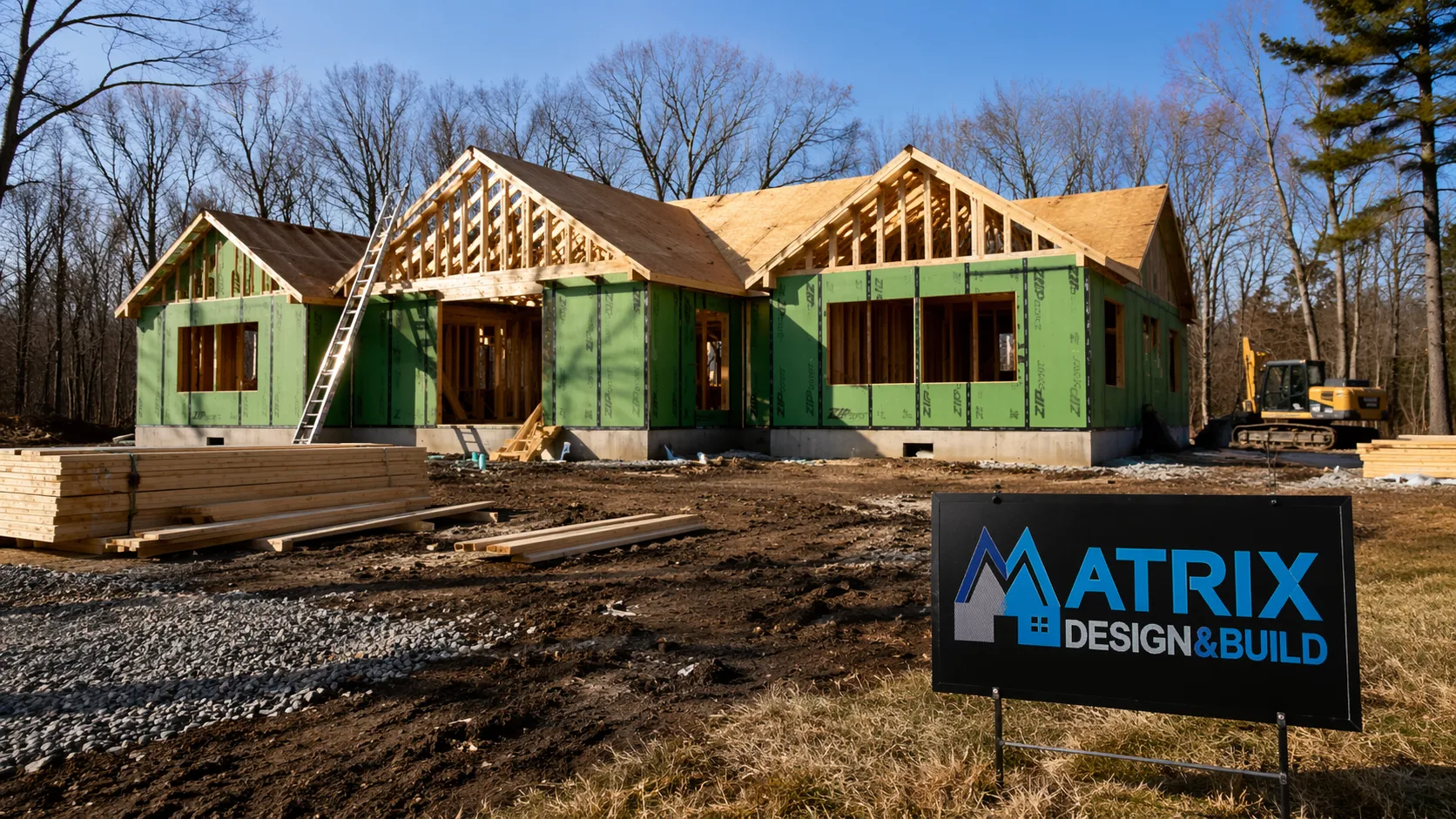
Most people think a home must be built fully finished in one long sequence. Professional builders know a smarter move: build the shell, not the whole house, and complete the interior only after approvals, inspections, financing, and schedules are stable.
This approach—called the Vanilla Box strategy—gives owner‑builders control, flexibility, and cost stability in an unpredictable environment like South Jersey.
8.1 The Concept: Build the Shell, Not the House
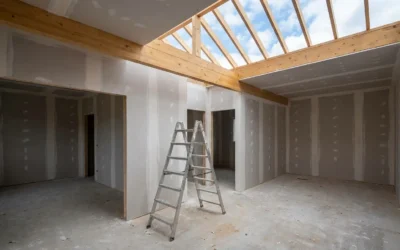
A Vanilla Box home is a weather‑tight structure with the critical systems roughed in but not finished.
Contractors use this approach for commercial builds and infill homes because it:
- Reduces financing pressure
- Avoids costly sequencing mistakes
- Allows finishing work on your own schedule
- Gets the hardest, most technical work done early
For owner‑builders, it’s the ideal middle ground between “full DIY” and “hire a general contractor.”
8.2 What Gets Completed in This Phase
A proper Vanilla Box typically includes:
- Foundation
- Framing (walls, floors, roof)
- Roofing installed
- Windows and exterior doors
- Exterior sheathing and house wrap
- Weather‑tight shell
- Basic plumbing, electrical, and HVAC rough‑ins
- Subfloor installed
- Stair structures (unfinished)
- Exterior siding installed or prepped
At this stage, the home passes major structural and rough‑in inspections.
8.3 What Gets Intentionally Left Unfinished
To keep the project cost‑efficient and owner‑friendly, the following are often left for later:
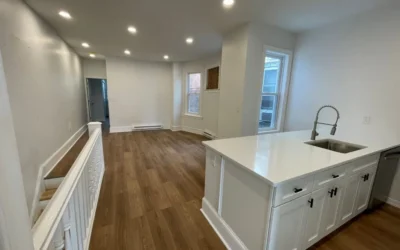
- Drywall
- Interior trim
- Flooring
- Cabinets and counters
- Final electrical fixtures
- Final plumbing fixtures
- Interior doors
- Painting
- Landscaping
- Driveway paving
- Porch/deck finishes
These are the parts of the build where DIY is possible and subcontractor scheduling is straightforward.
8.4 Why This Works Especially Well in South Jersey
South Jersey’s permitting, utility delays, and inspector schedules make the Vanilla Box approach especially effective because:
- The most code‑intensive phases are completed early
- Utility connections can be finalized without delaying interior work
- Variance or inspection issues are caught before finishing
- The house becomes insurable and secure early
- You can pause work during periods of township or utility backlogs
- Weather is unpredictable—getting the shell up protects everything else
It’s the safest way to build when approval cycles are slow and costs are volatile.
8.5 How It Simplifies Permits and Inspections
By finishing the shell first, you:
- Group inspections logically (foundation, framing, rough‑ins)
- Reduce conflicts between multiple trades
- Avoid rework caused by premature finishing
- Give inspectors a clean, clear site
- Eliminate “half-finished interior” code violations
- Delay final inspections until you’re truly ready
Townships prefer this approach because the build stays organized and compliant.
8.6 Using Vanilla Box to Reduce Financial Pressure
The Vanilla Box strategy lowers financial risk by:
- Letting you finish the interior in phases
- Allowing sweat equity without slowing major trades
- Reducing interest costs on construction loans
- Avoiding cost overruns caused by rushing
- Letting you shop for materials over time instead of under deadline pressure
Homeowners often save 15–25% simply by sequencing the project this way.
Thinking about adding space to your home?
MatrixGC designs and builds second-story, rear, third-floor and ADU additions in Philadelphia and South Jersey. Free estimate and free design consultation, permits handled, 203(k) and HomeStyle loans welcome. Buying a fixer-upper? See our 203(k) renovation services.
9. What You Can Actually Do Yourself
Many people imagine themselves building everything. In reality, New Jersey’s regulations and code requirements define very clearly what homeowners can and cannot do.
Success comes from doing the right DIY tasks—not all of them.
9.1 Tasks Most Homeowners Can Handle
These are tasks that don’t require licensing in NJ and are realistic for a motivated homeowner:
- Painting
- Flooring (LVP, tile, hardwood installation with guidance)
- Trim and molding installation
- Baseboards and casing
- Interior doors
- Insulation (with proper vapor barrier details)
- Landscaping
- Decking or railing (non-structural portions)
- Cabinet assembly and installation
- Simple demolition of non‑load‑bearing elements
Time‑consuming but doable.
9.2 Tasks That Require Licensed Trades in NJ
New Jersey is strict about who can perform certain work. The following typically require licensed professionals:
- Structural framing modifications
- Electrical work (anything beyond replacing fixtures)
- Plumbing work (new lines, alterations, venting)
- HVAC systems
- Septic installation
- Gas line installation
- Fire suppression systems
- Roofing beyond minor repairs
- Structural concrete work
You’re allowed to pull permits as the owner, but trades performing the work must be licensed.
9.3 Where DIY Saves Money—and Where It Costs More
DIY saves money when tasks are:
- Labor-heavy
- Low-risk
- Easy to redo without major cost
- Not subject to high inspection scrutiny
Examples: painting, flooring, trim, interior carpentry.
DIY costs more when tasks:
- Risk failing inspections
- Require specialized tools
- Are safety-sensitive
- Affect structural or mechanical systems
- Could damage completed work (e.g., bad tile layout ruining waterproofing)
Examples: plumbing, electrical, structural framing, HVAC.
The rule:
If the work can cause a chain reaction of expensive fixes—hire a pro.
9.4 Combining Your Work With Subcontractors
A hybrid approach works best:
- Pros handle structural and mechanical systems
- Homeowners handle finishing and cosmetic tasks
- You manage scheduling—but give professionals clean, ready spaces
- Communicate clearly which tasks must be done before others
- Keep all work documented for inspections
This lets you save money without creating code problems or scheduling conflicts.
10. Hiring Subcontractors Without Losing Control
Finding good trades in South Jersey is often more challenging than getting permits. Builders get priority, seasonal shore work pulls crews away, and small delays can cascade into weeks.
But with the right approach, you can hire reliable subs and keep the project moving.
10.1 How to Find Reliable Trades in South Jersey
Strong sources include:
- Referrals from local builders or real estate investors
- Township inspectors (they see who does clean work)
- Local supply houses (lumber yards, plumbing supply stores)
- Facebook community groups and neighborhood recommendations
- Existing subcontractors recommending other trades
- Drive-by observations of crews working on similar builds
Tip: Trades that work for builders are usually your best bet.
10.2 Structuring Payments and Scope
The best way to avoid disputes is a clear, written scope of work.
Each agreement should include:
- Exact tasks included
- Materials included or excluded
- Start date and estimated duration
- Required inspections
- Cleanup responsibilities
- Payment schedule tied to milestones (never time-based)
- Penalties or walk-away rules
Avoid paying large deposits.
For most trades, 10%–20% upfront max is standard, with balance due after inspection approval.
10.3 Common Disputes and How to Avoid Them
The most common issues owner‑builders face:
- “That wasn’t included” scope arguments
- Subcontractor disappears mid-job
- Work done out of sequence
- Failed inspections due to shortcuts
- Trades blaming each other for problems
Avoid these by:
- Writing everything down
- Sending photos of existing conditions before work starts
- Using clear milestone payments
- Confirming who orders materials
- Confirming who handles inspection corrections
- Keeping a daily log with progress photos
Documentation prevents 90% of headaches.
10.4 Managing Multiple Trades at Once
As the owner‑builder, you become the scheduler. To avoid chaos:
- Only schedule one trade at a time inside the house
- Never overlap drywall, HVAC, plumbing, or electrical
- Build a week-by-week sequence, not a day-by-day one
- Keep your site clean—subs respect clean job sites
- Use group texts or shared calendars to coordinate
- Walk the site daily during active work phases
The more organized you are, the more subcontractors will treat your project professionally.
11. The Real Cost Breakdown
Most first‑time builders underestimate the cost of building a home—not because construction is unpredictable, but because they overlook how many non‑construction expenses hit early.
In New Jersey, these “invisible” costs often equal 25%–40% of the total budget before the actual build begins.
A realistic cost breakdown gives you a clear financial path instead of a wishful estimate.
11.1 Land + Soft Costs vs. Construction Costs
A typical South Jersey project divides into two major categories:
Land + Soft Costs (often 25–40% of total)
These include:
- Land purchase
- Surveys
- Soil testing (perc, borings)
- Environmental reports (wetlands delineation, LOI, etc.)
- Septic and well design (if applicable)
- Engineering (grading plan, drainage plan)
- Architectural drawings
- Permit fees (zoning, building, engineering, review fees)
- Utility connection fees
- Tree removal and site clearing
- Legal costs, title, recording fees
These are front‑loaded—you must pay them before a single wall goes up.
Construction Costs (60–75%)
These cover:
- Site work and excavation
- Foundation
- Framing and lumber
- Roofing
- Windows and doors
- Rough plumbing/electrical/HVAC
- Insulation
- Drywall
- Siding
- Interior finishes
- Driveway and grading
- Final utility connections
- Inspections and CO
Construction costs get spread across the project.
Soft costs hit fast.
This is why many budgets accidentally collapse early.

11.2 Cost per Square Foot in South Jersey
In 2026, realistic South Jersey pricing looks like this:
- Basic build: 160–225 per sq ft
- Mid‑grade custom: 225–300 per sq ft
- High‑end or complex builds: 300–425+ per sq ft
- Coastal areas or flood zones: add 15–40%
- Pinelands or engineering-heavy sites: add 10–25%
Important:
These numbers are for finished homes, not Vanilla Box structures.
Cost per square foot also varies dramatically by:
- Site conditions
- Utility availability
- Engineering requirements
- Township demands
- Insulation and energy code requirements
- Roof pitch and complexity
- Material choices
A “simple” 2‑story box is always more cost-efficient than a 1‑story ranch with the same square footage because foundations and roofs dominate cost.
11.3 Vanilla Box vs. Full Completion Pricing
Vanilla Box lets you stop early—on purpose.
Typical cost breakdown:
Vanilla Box Pricing (shell + rough-ins)
- Foundation, framing, roof, windows
- Rough plumbing, electrical, HVAC
- Exterior finish
- No drywall, no flooring, no fixtures
Typical cost range:
- 110–165 per sq ft depending on complexity
Full Completion Pricing
- All interior finishes
- Fixtures
- Trim
- Paint
- Driveways, landscaping
- Final CO
Typical cost range:
- 160–300+ per sq ft
Choosing Vanilla Box can reduce upfront cost by 30–40% and allows finishing later at your pace.
11.4 Where Most Budgets Blow Up
Owner‑builder budgets fail for the same predictable reasons:
Site work surprises
- Rock
- Bad soil
- Drainage requirements
- Retaining walls
- Septic redesigns
- Underground water issues
Underestimating interior finishes
Floors, trim, doors, cabinets, counters, tile, hardware, and lighting easily add up to 50–80k more than expected.
Utility connection costs
Gas, electric, and sewer fees vary wildly by township and utility provider.
Change orders
Design changes during construction cause cascading increases.
Underestimating time
Delays mean:
- More loan interest
- More storage costs
- More rental months
- More subcontractor mobilization fees
Engineering revisions
Townships often require multiple updates to grading, drainage, or architectural details.
The best defense is allocating 15–20% contingency—not 5–10%.
12. Financing a Self‑Build in New Jersey
Financing is where owner‑builders discover the biggest shock:
banks do not love self‑builds, especially in a state with strict code and high permitting complexity like NJ.
But with the right structure, financing becomes manageable—and sometimes far easier if you use phased building or a Vanilla Box approach.
12.1 Why Lenders Are Cautious
New Jersey lenders worry about owner‑builder projects because:
- Construction delays are common
- Owner‑builders have weaker scheduling control
- Banks risk being left with a half‑finished home
- Permits and inspections vary by township
- Costs regularly exceed estimates
- Land value isn’t enough to secure the loan
- Past owner‑builder failures have made lenders strict
So lenders protect themselves with:
- Higher documentation requirements
- Mandatory general contractors (sometimes)
- Tighter draw schedules
- More inspections and oversight
- Bigger cash reserves required
The good news:
You can still finance a self-build—you just need the right structure.
12.2 Construction Loans Explained Simply
A construction loan is different from a regular mortgage.
Here’s how it works in plain English:
- Bank approves your total project cost (land + construction + contingency).
- You get a loan with a draw schedule—money is released in phases.
- You only pay interest on the amount used so far.
- As each construction phase is finished, the bank sends an inspector.
- When the home is complete, the loan converts into a normal mortgage.
Key features lenders look for:
- Signed contracts with trades
- Insurance and licenses for contractors
- A complete budget with line items
- Full permit-ready plans
- A realistic timeline
- Evidence you can handle overruns
Owner‑builders may need:
- More cash reserves
- A licensed builder consultant
- An appraiser-approved plan
Some banks simply won’t allow an owner‑builder unless you hire a GC as a “project manager” on paper.
12.3 Using Renovation Loans Strategically
A lesser-known strategy is using renovation loans for new construction on improved or partially improved properties.
Examples:
- FHA 203(k)
- Fannie Mae Homestyle
- Freddie Mac CHOICERenovation
These can work when:
- You’re building on an existing foundation
- You’re adding substantial square footage
- You’re converting an existing structure
- The property already has utilities or a driveway
Advantages:
- Lower down payments
- More flexible underwriting
- Less strict contractor requirements
- Sometimes no full construction loan needed
Drawback:
These loans still require professional trades for structural and mechanical work.
12.4 How Phased Building Lowers Financing Risk
Phasing is the owner‑builder’s financial superpower.
Breaking the project into stages lets you:
- Pay for land and soft costs with cash, not a loan
- Build the shell first at a lower loan amount
- Convert to long-term financing sooner
- Reduce interest payments dramatically
- Avoid large upfront contractor contracts
- Pause safely without triggering loan penalties
- Keep the total project cost within approved limits
Lenders are far more comfortable financing:
- A shell that already exists
than
- A full build that exists only on paper.
This is why the Vanilla Box + phased approach works so well in South Jersey:
it reduces both your risk and the lender’s risk.
13. Timeline Reality Check
Most first‑time builders drastically underestimate the time required to build a house—not because the physical construction takes long, but because approvals, inspections, weather, and subcontractor availability create unavoidable gaps.
In South Jersey, a “quick build” is rarely less than 8–10 months.
A normal build is 12–18 months.
Longer is not uncommon.
Understanding this ahead of time keeps your project calm and predictable instead of stressful and chaotic.
13.1 What a Realistic Schedule Looks Like
Here’s a typical timeline for a properly managed South Jersey owner‑builder project:
- Pre‑Purchase Due Diligence
2–6 weeks
(Zoning checks, wetlands review, utilities research, engineer consults.)
- Concept Design + Preliminary Layout
3–8 weeks
- Full Plans + Engineering + Final Site Plan
4–10 weeks
(Varies heavily by architect/engineer turnaround time.)
- Approvals and Permits
2–6 months
(Complex towns, Pinelands, CAFRA zones = much longer.)
- Site Work and Foundation
3–6 weeks
- Framing and Shell
4–10 weeks
(Weather delays can stretch this.)
- Rough Plumbing/Electrical/HVAC
3–6 weeks
- Inspections + Corrections
1–4 weeks
- Insulation + Drywall
2–4 weeks
- Interior Finishes
6–16 weeks
(Varies with DIY vs subcontractors.)
- Final Inspections + CO
1–4 weeks
This assumes no major redesigns, inspection failures, major delays, or utility issues.
Those assumptions rarely hold true.
13.2 Permit Delays vs. Construction Delays
Construction delays are annoying.
Permit delays are unpredictable.
Permit delays (South Jersey):
- Zoning review backlog
- Planning/variance board schedule gaps
- Township engineer revisions
- Environmental or flood zone approvals
- Utility “will serve” letters
- Incomplete applications (common)
- Staff vacations/seasonal slowdowns
Construction delays:
- Subcontractor availability
- Weather
- Failed inspections
- Material lead times (windows, trusses)
- Work done out of sequence
- Backed‑up trades from other jobs
Permit delays often compress the construction timeline, creating pressure that leads to mistakes.
13.3 Weather, Inspections, and Scheduling Conflicts
This is the South Jersey trifecta of time-loss:
Weather
Rain, humidity, and freezing conditions routinely delay:
- Concrete
- Framing
- Roofing
- Exterior finishes
Inspections
Most trades cannot proceed until the previous inspection is passed.
Townships often have only 1–2 inspectors for entire regions.
This creates:
- Missed inspection windows
- Re-inspections on specific days only
- Week-long gaps for small corrections
Scheduling Conflicts
Especially common for owner‑builders:
- Subcontractors shuffle your job for bigger contractor jobs
- They finish 90% and disappear
- Trades blame each other for sequence problems
- Utility crews arrive with no warning
These are normal, not exceptions.
13.4 How to Keep Momentum on Your Project
Momentum is everything.
Use these strategies:
- Always stay 2–3 steps ahead of the schedule
If you’re framing, order windows.
If you’re roughing in, order insulation.
- Book inspections early
Don’t wait for subs to finish—schedule the next slot as they near completion.
- Maintain a clean and well-organized jobsite
Pros take clean sites seriously; messy sites signal disorganization.
- Keep a running checklist of dependencies
What depends on what?
What stops if one thing slips?
- Have backup subs for every trade
South Jersey markets are tight.
Backup options save weeks.
- Protect the site from weather
Tarps, pumps, and temporary heating prevent expensive water damage and frozen delays.
- Use a weekly rhythm
Weekly sequencing keeps trades moving and allows predictable planning.
Momentum doesn’t come from working fast—
it comes from planning so the next step is always ready.
14. Risk Management (What Can Go Wrong)
Every build has risks.
Owner‑builders face them more directly because they don’t have a general contractor absorbing problems.
Understanding the most common risks helps you prepare for them instead of being blindsided.
14.1 Inspection Failures and Rework
Failed inspections happen, even with good trades.
Common reasons:
- Incorrect nailing patterns or shear wall details
- Missing fire blocking
- Improper plumbing vents
- Electrical boxes not secured or spaced correctly
- HVAC duct sizing errors
- Improperly flashed windows
- Wrong nail type or length
- Missing hurricane ties or straps
- Joist hangers improperly seated
Rework costs are usually:
- Time lost
- Subs charging for “return trips”
- Delayed next trade
- Weather exposure
Best prevention:
- Walk the site yourself before calling inspections
- Use inspection checklists
- Photograph completed work for documentation
- Don’t rush trades to “just finish”
14.2 Contractor No‑Shows and Delays
This is the number‑one risk for owner‑builders.
Why it happens:
- Subs take higher‑paying contractor work first
- Your job is small compared to their builder clients
- Poor scheduling
- Cash flow issues on the sub’s side
- Weather delays cascade across their other jobs
- They book too many jobs at once
Prevention strategies:
- Pay small deposits (10–20%)
- Use written scopes
- Set performance expectations
- Keep job sites clean and ready
- Be professional—subs respond to respect
- Stay in weekly contact
- Have backups for every trade
Your organizational skills have enormous influence on sub availability.
14.3 Budget Overruns
Overruns almost always follow patterns:
Scope creep
Upgrades during construction destroy budgets.
Underestimating finishes
Tile, cabinetry, hardware, trim, appliances—these add up quickly.
Site work surprises
Water table issues, soft soil, drainage fixes, retaining walls, rock.
Utility and permitting fees
Some towns have:
- Sewer impact fees
- Water tap fees
- Road opening permits
- CAFRA or Pinelands fees
Delays
Time is expensive—extra loan interest, extra rent, extra storage.
Prevention:
- Start with detailed line‑item budgets
- Add 15–20% contingency
- Avoid design changes mid‑build
- Don’t lock yourself into one supplier
- Control scope from day one
14.4 Legal and Liability Exposure
Owner‑builders take on responsibilities GCs normally absorb.
Risks include:
Site injuries
If someone gets hurt, you can be liable unless:
- Trades carry insurance
- You carry builder’s risk and liability coverage
Unpermitted work
Townships can:
- Shut down your job
- Require demolition
- Reject CO applications
Contractor disputes
Without a written contract, disagreements become:
- Your word vs. theirs
- Delays
- Cost overruns
Code violations discovered later
Bad wiring, plumbing, or framing discovered during resale can force expensive corrections.
Mechanic’s liens
If a sub isn’t paid by their contractor or supplier, they can lien your property.
Protect yourself with:
- Insurance verification
- Written agreements
- Permit‑ready plans
- Clear scopes of work
- Payment tied to milestones
- Documented inspections
Good project management isn’t optional—it’s protection from risk.
15. When Owner‑Building Makes Sense
Owner‑building is not for everyone—but when the circumstances are right, it can deliver massive value, control, and long-term financial benefit. The goal is to recognize when the stars actually align for a DIY build.
15.1 Ideal Scenarios for DIY Builds
Owner-building works best when the project is:
Simple and straightforward
- Square or rectangular footprint
- Standard foundation and roof
- Minimal structural complexity
- No major architectural quirks
On a cooperative lot
- Good soil
- No wetlands
- Minimal grading requirements
- Utilities available at the street
In a predictable township
- Moderate permitting requirements
- Experienced inspectors
- Faster approvals
With sufficient time and flexibility
You must be able to:
- Take calls during the day
- Meet subs onsite
- Attend inspections
- Solve problems quickly
When you have organization and patience
The best owner‑builders don’t know everything—they manage everything.
15.2 Investors vs. Primary Homeowners
Investors:
- Rarely succeed as owner‑builders in South Jersey
- Face strict lending limits
- Usually cannot be on site daily
- Must meet hard deadlines
Primary homeowners:
- Can be involved daily
- Make decisions faster
- Are more flexible
- Have more emotional and financial investment
Owner‑building is much better suited for primary residences.
15.3 When Experience Matters
Experience isn’t mandatory, but it’s extremely helpful if you have:
- Managed construction or renovations before
- Worked with subcontractors
- Completed a gut rehab
- Understand basic building sequencing
- Are comfortable reading construction drawings
Owner‑building isn’t a trade skill—it’s a project management job.
Experience helps you communicate clearly with pros and avoid costly mistakes.
16. When You Should Not Do It Yourself
Some projects are simply too risky for owner-building—and forcing it will cost more than hiring a general contractor from the beginning.
16.1 Complex Builds and Structural Challenges
Avoid DIY builds when your project includes:
- Custom architecture
- Large cantilevers
- Complicated roof systems
- Steel beams or engineered structures
- Walkout basements
- Steep lots needing retaining walls
- Waterfront or high‑flood‑zone homes
- Pinelands or CAFRA oversight
These projects require professional coordination that’s very hard for a first‑timer.
16.2 Time Constraints and Full‑Time Jobs
If you work full-time and cannot leave for inspections or emergencies, owner‑building becomes extremely difficult.
Owner‑builders must:
- Answer calls all day
- Coordinate schedules
- Meet inspectors
- Solve problems immediately
If you can’t stop work to handle a site issue, your project will stall constantly.
16.3 High‑Risk Municipalities
Some towns in South Jersey are simply too demanding for a first‑time owner‑builder.
Risk factors include:
- Long permit backlogs
- Strict zoning interpretations
- Demanding township engineers
- Complex environmental overlays
- Slow inspection schedules
Even pros struggle in these towns—owner‑builders struggle more.
16.4 When Hiring a GC Is Actually Cheaper
A general contractor may cost 15–25% more upfront, but often saves money when:
- The build is complex
- You have no time to manage the project
- You can’t negotiate materials/trades
- You make frequent design changes
- Mistakes require expensive rework
- Your financing requires professional management
For many homeowners, hiring a GC avoids delays, change orders, and stress—ultimately costing less than self‑managing a complex job.
17. The Hybrid Approach (Best of Both Worlds)
Most successful NJ owner‑builders follow a hybrid model.
It offers the control and savings of DIY without the risk of managing the whole structure.
17.1 Contractor Handles Structure (Vanilla Box)
A licensed contractor builds the entire shell and completes:
- Foundation
- Framing
- Roofing
- Windows/doors
- Siding
- Rough plumbing
- Rough electrical
- Rough HVAC
This ensures:
- The structure is code‑correct
- Inspections pass
- The home is weather‑tight
- You meet lender requirements
- You minimize construction risk
17.2 Homeowner Finishes the Project
Once the Vanilla Box is complete and watertight, you take over:
DIY‑friendly tasks:
- Flooring
- Painting
- Trim
- Interior doors
- Landscaping
- Hardware
- Light fixtures
- Bathroom vanities
- Shelving and closets
- Minor carpentry
You can complete these gradually, with fewer schedule pressures.
17.3 Cost vs. Control Balance
Hybrid advantages:
- Lower GC cost
- Lower project risk
- Faster permitting
- Cleaner inspections
- Predictable structure
- Full control over finishes
- Ability to phase spending
Cost savings vary, but hybrid projects typically save 10–25% compared to full‑GC builds.
17.4 Real-World Example of This Approach
A common South Jersey scenario:
- Contractor builds shell + rough mechanicals = $190 per sq ft
- Homeowner finishes interior over 6–12 months = $40–75 per sq ft
Total: $230–260 per sq ft
Comparable local builder cost: $280–350 per sq ft
You save 40–80k on a 2,000 sq ft home—and dramatically reduce risk.
18. Alternatives to Building From Scratch
Owner‑building isn’t the only path to a custom home.
Sometimes alternative routes are simpler, faster, and cheaper in South Jersey.
18.1 Buying and Renovating
Renovations can be:
- Cheaper
- Faster
- Less risky
- Easier to finance
Good candidates:
- Older homes with solid foundations
- Homes needing cosmetic updates
- Houses with outdated layouts
- Properties in desirable school districts
Renovation loans (203k, Homestyle) work well for these.
18.2 Additions vs. New Construction
Additions often make sense when:
- The existing home sits well on the lot
- Utilities and driveway already exist
- Zoning limits total lot coverage
- You want to stay within neighborhood context
But additions can cost as much as new construction when:
- Complex tie-ins are required
- Rooflines need redesigning
- The existing structure is outdated or damaged
18.3 Tear‑Down and Rebuild Strategy
In many South Jersey towns, tear‑downs are the sweet spot.
Why?
- Utilities already exist
- Driveway and frontage established
- Setbacks may carry over
- Zoning is predictable
- Financing is simpler
This reduces soft costs and eliminates major unknowns.
18.4 When Renovation Loans Make More Sense
Renovation loans work best when:
- A structure already exists
- The foundation is usable
- You need financing with low down payment
- You want one loan for purchase + construction
- The project is under ~250k in work
These are often more practical than full construction loans.
19. FAQs (South Jersey Specific)
Can I pull permits as a homeowner in NJ?
Yes. For single‑family homes you occupy, NJ allows homeowners to apply as their own contractor.
Townships may still require licensed trades for mechanical work.
Do I need a license to build my own house?
No.
But you must follow all codes, hire licensed pros where required, and take full legal responsibility.
How long do approvals take in South Jersey?
Typical range: 3–6 months
With variances or environmental issues: 6–12 months+
Is building cheaper than buying in NJ?
Usually yes, if you manage scope and build efficiently.
But building is not faster—and soft costs add up quickly.
Is the Vanilla Box approach worth it?
For most owner‑builders: absolutely yes.
It reduces risk, simplifies financing, speeds inspections, and gives you flexibility on interior costs.
20. Final Takeaways
Owner‑building in South Jersey is absolutely possible—if you understand what you’re getting into.
20.1 The Biggest Mistakes to Avoid
- Underestimating soft costs
- Choosing the wrong lot
- Ignoring township requirements
- Designing before vetting the land
- Overcomplicating the architecture
- Letting subs run your schedule
- Failing inspections repeatedly
- Not budgeting a 15–20% contingency
20.2 The Smartest Path for Most Homeowners
- Start with due diligence
- Choose a cooperative township
- Keep the design simple
- Use the hybrid Vanilla Box approach
- DIY only the safe, finish‑level tasks
- Phase your project intelligently
- Stay organized with schedules and scopes
This gives you control without taking on unnecessary structural risk.
20.3 How to Move Forward With Confidence
Next steps:
- Start scouting lots—but vet them professionally
- Build a realistic budget using South Jersey numbers
- Talk to lenders early
- Begin a simple concept design
- Decide whether hybrid building fits your time and skill level
- Create a 12‑month roadmap with contingencies
You don’t need to be a contractor to build your own home in South Jersey.
You just need the right strategy—and now you have one.
Planning a project in Philadelphia or South Jersey?
MatrixGC is a licensed Philadelphia general contractor (#43984). Learn about our home additions, see Vanilla box construction, or get a free estimate. Call (215) 501-7566.


0 Comments