
If you’re planning a renovation, buying a fixer-upper, or preparing for future upgrades, you should learn what it means to build a vanilla box in Philadelphia. It’s becoming a popular approach among homeowners, investors, and 203(k) buyers because it gives you a clean, safe, structurally sound starting point before you begin your full renovation.
In a city full of older rowhomes, plaster walls, aging systems, and unique code requirements, beginning with a vanilla box can save thousands of dollars and months of headaches. This guide explains exactly what a vanilla box is, what’s included, when it makes sense, and why so many Philadelphia homeowners start here.
Build a Vanilla Box in Philadelphia (Residential Definition)
Vanilla Box used to be a common term in commercial construction to provide tenants with a standard, ready-to-customize base. But now it is gaining popularity in residential properties as well, for various reasons that we will discuss later in the article.
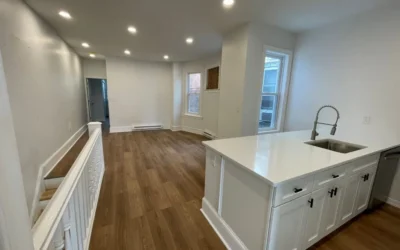
In simple terms, vanilla box construction transforms a home into a blank canvas, clean, framed, insulated, drywalled, and ready for your final finishes.
It is not a finished renovation. It is the middle stage between a bare shell and a fully completed home.
A typical residential vanilla box in Philadelphia includes:
- Demolition and removal of damaged, outdated, or unsafe materials
- Structural repairs where needed
- Framing of walls and layout
- Electrical rough-ins
- Plumbing rough-ins
- HVAC rough-ins
- Insulation
- Drywall installation and finishing
- Updated subfloors
- Code-compliant windows/doors
Once complete, the home is ready for finishes such as kitchens, bathrooms, flooring, trim, paint, lighting fixtures, and final utilities.
Think of it as turning an old or distressed home into a space that is “renovation-ready.”
Vanilla Box vs. Gray Shell vs. Full Renovation
Now, let’s discuss how a vanilla box differs from a gray shell and a complete renovation.
Vanilla Box vs. Gray Shell
A gray shell is essentially the raw structure: framing, foundation, and exterior. Basically, a grey shell includes a fully complete exterior and an incomplete interior. On the other hand, a vanilla box adds utility rough-ins, drywall, subfloors, and insulation.
Vanilla Box vs. Full Renovation
A fully renovated building is ready to move in. All you need to do is bring your furniture and personal items into the home and move in. It includes:
- Kitchens
- Bathrooms
- Tile
- Flooring
- Trim
- Paint
- Fixtures
- Design finishes
- Appliances
Vanilla box stops one stage earlier. It gives homeowners flexibility to take their time choosing finishes or to renovate in phases.

What’s Included in Residential Vanilla Box Construction in Philadelphia
If you want to build a vanilla box in Philadelphia with Matrix Construction, you should know this package includes:
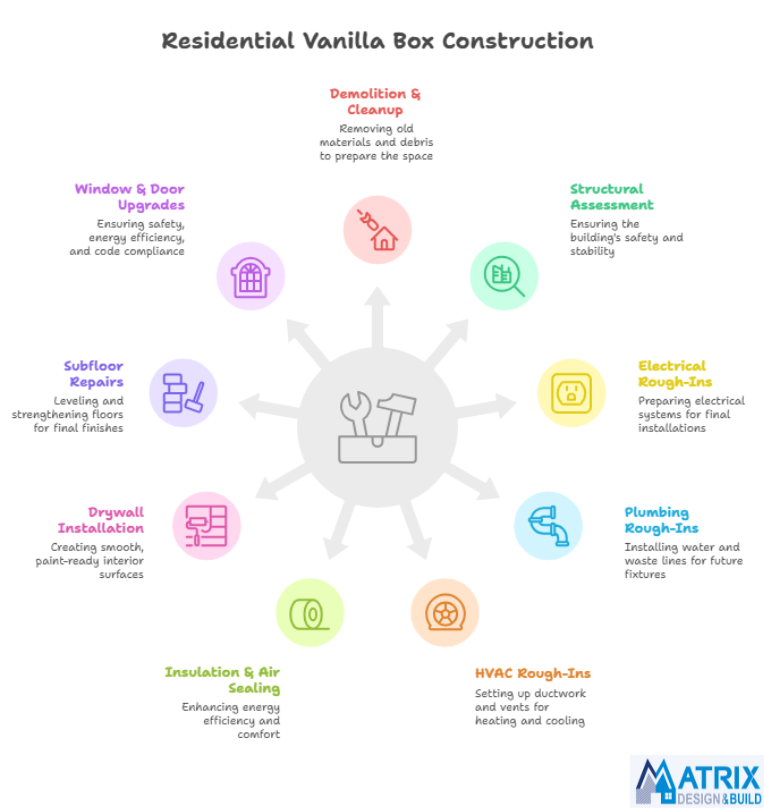
1. Demolition & Cleanup
Every renovation project includes some level of demolition. So, we start with a demo and a full clean-up. This step includes:
- Removal of plaster, lath, paneling, old plumbing, old wiring, and damaged materials
- Full debris removal
- Safe exposure of the home’s real condition (critical in older Philly homes)
2. Structural Assessment & Framing
Before we begin the real construction, we make sure the building is structurally sound and safe. In this step, we:
- Reinforce or replace joists
- Fix sagging floors
- Reframe interior walls
- Adjust layouts if needed
3. Electrical Rough-Ins
Electrical is another important part of a vanilla construction in Philadelphia. However, installing electrical finishes is not included. We prepare all the rough-ins ready for you to install every outlet and switch you want. This step includes:
- Circuits, outlet placement, and lighting roughs
- Compliance with the Philadelphia electrical code
- Updated service where required
4. Plumbing Rough-Ins
Same as electrical, we install all the plumbing rough-ins ready for you, including:
- Water supply lines
- Waste lines
- Venting
- Basement and second-floor bathroom roughs
5. HVAC Rough-Ins
Heating and cooling systems are a major part of making a home comfortable and code-compliant. During vanilla box construction, we don’t install the final equipment, but we prepare all the essential HVAC rough-ins so everything is ready for your system of choice. This step includes:
- Ductwork
- Returns
- Mini-split rough-ins
- Placement for air handlers
6. Insulation and Air Sealing
Insulation plays a big role in energy efficiency and comfort, especially in older Philadelphia rowhomes. Before drywall goes up, we make sure the home meets current requirements and is properly sealed. This step includes:
- Meeting R-value requirements
- Fire-blocking for rowhomes
- Air sealing for energy performance
7. Drywall Installation
Once all mechanical rough-ins pass inspection, we close up the walls. The goal is to create a clean, smooth, paint-ready interior surface. This step includes:
- Hung, taped, first-coated, and ready for paint
- Smoothed walls for any design style
8. Subfloor Repairs or Replacements
Many Philadelphia homes have uneven or damaged subfloors. Before installing any flooring in the final renovation stage, we first correct these issues to create a safe and level foundation. This step includes:
- New plywood where needed
- Leveling for future hardwood or LVP
- Eliminating squeaks and uneven surfaces
9. Windows & Doors (Code-Compliant)
Upgrading windows and doors is not necessarily for cosmetic purposes. Sometimes it’s necessary for safety, energy efficiency, and code compliance, especially in bedrooms and basements. As part of the vanilla box stage, we make sure openings are secure and meet Philadelphia requirements. This step includes:
- Updated egress in bedrooms
- Weather-resistant and energy-efficient openings
What a Vanilla Box Does Not Include
It is necessary to know that a vanilla box is not a complete house for you to live in. Homeowners often misunderstand this, so you should have a good understanding of items that are NOT included in a vanilla box construction in Philadelphia.
A vanilla box does not include:
- Finished flooring
- Kitchen cabinets or countertops
- Bathroom fixtures or tile
- Appliances
- Paint
- Trim or molding
- Light fixtures
- Plumbing fixtures
- Final mechanical equipment
- Exterior upgrades (unless included in scope)
This protects your budget because you choose all your finishes later, and you may also be able to save money by doing some of these tasks yourself.
Why Philadelphia Homeowners Choose to Build a Vanilla Box in Philadelphia
Now, you might think, why choose a vanilla box instead of a complete renovation? We don’t say a vanilla box is a good option for everyone, but it is worth considering for the following reasons.
- It creates a clean starting point for renovations. Older Philly homes hide surprises. A vanilla box eliminates unknowns early.
- It is perfect for distressed or outdated properties. Especially important in 203(k) or investor projects.
- A vanilla box reduces renovation risk. Discover structural, plumbing, and electrical issues BEFORE designing finishes.
- It supports phased renovation. If you’re renovating over time, vanilla box lets you pause after the rough stage, especially if you have a tight budget.
When Vanilla Box Construction Makes Sense
Vanilla box construction is a flexible and cost-efficient option for almost any type of residential renovation in Philadelphia. Whether you’re planning a full gut remodel, upgrading a bathroom, reworking a basement, or simply resetting the layout, the vanilla box stage creates a clean, safe, and code-ready foundation. Once this foundation is in place, you can complete the home at your own pace, with full control over budget, timing, and design.
This approach is ideal for:
1. Saving Money by Doing Finishes Yourself
A vanilla box is perfect for homeowners who want to manage part of the renovation themselves. We handle the complex, permit-required work, so all the heavy lifting is done professionally and safely. Once this stage is complete, you can tackle the DIY-friendly tasks such as:
- Painting
- Installing flooring
- Adding trim and baseboards
- Mounting light fixtures
- Installing cabinets or shelving
- Completing décor and finishing touches
This lets you save thousands while still ensuring the structure and systems are up to code. You get a professionally prepared, move-in-ready interior, and you finish it when your budget allows.
2. Renovating in Stages Before Moving In
Not every renovation needs to happen at once, especially if you’re purchasing a home that needs work, but you’re not planning to move in immediately. Vanilla box construction allows you to complete the most important parts of the project first:
- Clearing out old materials
- Correcting structural problems
- Updating mechanical systems
- Putting up new walls
- Getting the home inspected and code-compliant
Once the essential work is done, you can pause and complete the remaining rooms or design features over time. This is ideal for buyers who want to spread costs over months or years, or who want the flexibility to customize finishes after they’ve lived in the space for a while.
3. Rental Turnovers
For landlords, vanilla box construction offers a fast, clean way to reset a rental property before placing new tenants. This is especially valuable when units have:
- Aging mechanical systems
- Old plaster walls
- Wear and tear from long-term tenants
- Outdated finishes
- Layout issues that need correction
By rebuilding the interior to a fresh, code-compliant state, the property becomes easier to maintain, more attractive to renters, and better positioned for future upgrades. Once the vanilla box stage is complete, landlords can quickly add durable finishes suited for rental use and get the unit back on the market faster.
Philadelphia Permits and Code Requirements That Affect Vanilla Box Construction
Philadelphia has specific requirements for residential rough-ins. Homeowners should expect:
- Electrical rough inspection
- Plumbing rough inspection
- HVAC rough inspection
- Framing inspection
- Insulation inspection
Important code considerations include:
- Outlet spacing + GFCI locations
- AFCI requirements
- Bathroom exhaust and dryer vent rules
- Basement egress rules
- Return air sizing for HVAC
- Fire-blocking for rowhome party walls
- R-value insulation requirements
- EZ permit vs. Standard building permit differences
Matrix Construction handles all of these requirements, so homeowners stay compliant.
Build a Vanilla Box in Philadelphia: The Process in Matrix Construction
Let’s get familiar with a brief of the process. The Vanilla Box Construction process at Matrix Construction begins with a site visit and scope review to assess the project needs. We then proceed with architectural and engineering preparation, followed by securing the necessary permits. Once permitted, demolition and any required structural corrections are completed. This is followed by mechanical rough-ins, insulation, and fire-blocking to ensure safety and efficiency. Drywall installation comes next, after which the project is handed off for finishing touches, allowing homeowners to personalize the space.
Why Vanilla Box Construction Speeds Up Renovation
With everything exposed and ready:
- Designers can measure accurately
- Subcontractors can work without obstruction
- The timeline becomes more predictable
- Mechanical systems are planned correctly
It avoids the biggest renovation mistakes caused by designing around hidden problems.
Conclusion
If you’re buying a fixer-upper, renovating a rental, planning a 203(k) project, or upgrading an older rowhome, consider building a vanilla box. It is often the smartest and safest starting point. It gives you a clean, structurally sound, code-compliant foundation for any renovation style you choose.
To learn more about how Matrix Construction Solutions handles residential vanilla box projects, visit our Vanilla Box Construction service page or schedule a FREE Consultation.
FAQs
Do I need a permit?
Yes. Any electrical, plumbing, HVAC, or framing work requires proper permits.
How long does the process take?
4–12 weeks, depending on size and condition.
Can homeowners do any of these steps themselves?
Demo or minor cleanup, yes. Electrical, plumbing, HVAC, and structural work must be licensed in Philadelphia.
Is this good for rental properties?
Yes, especially for landlords preparing units for future upgrades.
Planning a project in Philadelphia or South Jersey?
MatrixGC is a licensed Philadelphia general contractor (#43984). Learn about our home additions, see Vanilla box construction, or get a free estimate. Call (215) 501-7566.



0 Comments