
Have you ever considered installing a spiral staircase in your home? Could it become not just a path between floors, but a sculptural centerpiece that saves space and elevates design?
In this article, we will walk you through:
- What exactly defines a spiral staircase
- Code requirements and permitting in Philadelphia
- The typical dimensions and types of spiral staircases
- The installation challenges you should plan for
- When a spiral staircase makes the most sense
- Dozens of spiral staircase ideas tailored for Philly homes
Read on, and by the end, you’ll feel confident whether a spiral staircase in Philadelphia is right for your project.
What Is a Spiral Staircase?
We often see people use the phrase “spiral stair” for any type of curved or round staircase. But if you do a quick Google search, you’ll see there are different types of curved-shaped staircases, and a spiral is just one of them!
So let’s see the most common types of curved staircases:
1. Spiral Staircase
A spiral staircase turns around one center pole. Everything wraps around that point. That’s why it takes very little space. The steps are narrow on one side and wider on the other. Most of the time, they are made of steel, wood, or both. These stairs are usually used when space is tight, like going to a roof deck, basement, or loft. They look cool, but they are not very comfortable for daily use, so they are rarely used as the main stairs in a home.
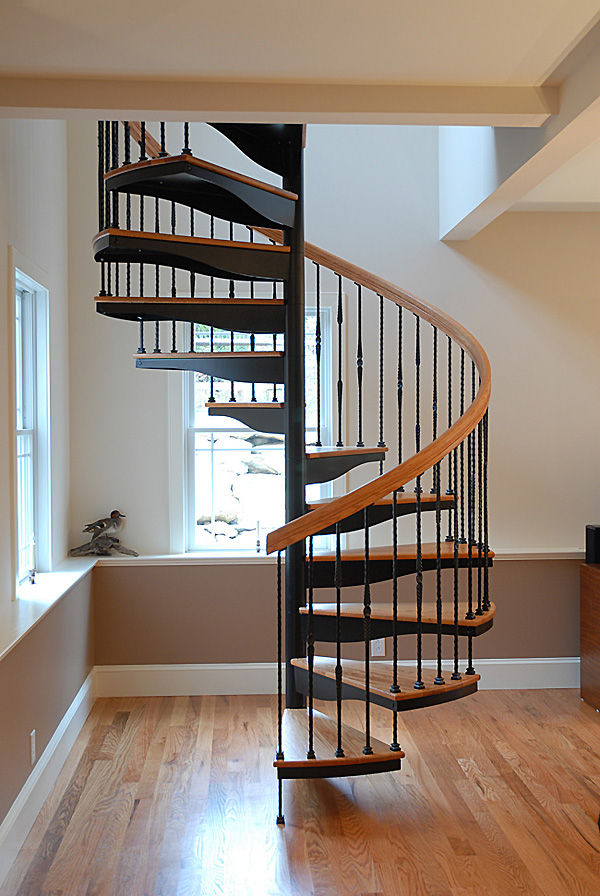
Figure 1: Spiral Staircase
2. Circular Staicase
A circular staircase also goes around, but without a center pole. The structure is supported by curved walls or stringers instead. Because of this, the steps are wider and much more comfortable than a spiral stair. These stairs feel smooth and natural when you walk on them. They are often custom-built and mostly used in high-end homes or commercial spaces where design really matters, and you don’t have a tight space for the staircase. Below is the top view of different types of circular staircases.
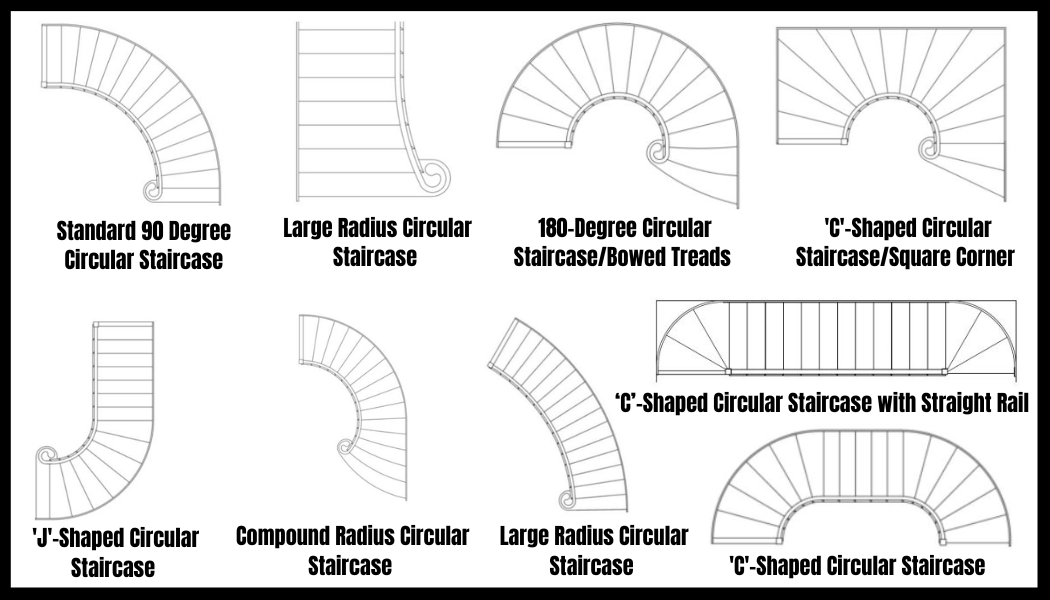
Figure 2: Circular Staircases Types
3. Elliptical Staircase
An elliptical staircase looks similar to a circular stair, but it’s stretched out and more open. It follows an oval shape, not a perfect circle. These stairs feel grand and make a strong statement. They are very hard to design and build, and are usually made one time only for that specific house. You mostly see them in luxury homes or special buildings where the staircase is part of the architecture, not just a way to go up.
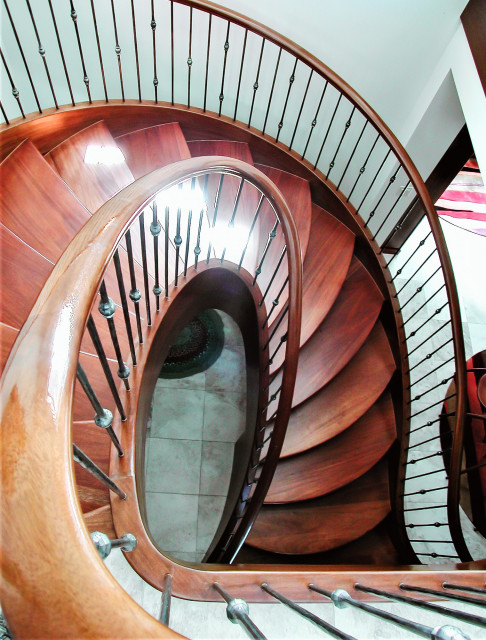
Figure 3: Elliptical Staircase
4. Curved Staircase
A curved staircase gently turns as it goes up, but it doesn’t make a full circle. It feels softer than a straight stair and more elegant at the same time. The steps are wider on the outside curve and very comfortable to use. These stairs are common in residential entryways and townhouses where homeowners want something special but still practical.
5. Helical Staircase
A helical staircase twists upward like a spiral, but without a center column. This makes it feel light and almost floating. The structure is hidden inside the design, so it looks very clean and modern. These stairs are always custom-made and usually used in modern homes or design-focused spaces where architecture is part of the experience.
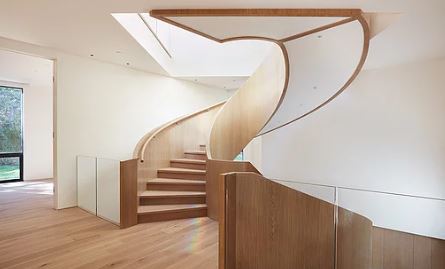
Figure 4: Helical Staircase
6. Winding Staircase
A winding staircase changes direction using angled steps instead of a landing. This helps save space while still keeping the feel of a normal stair. You see these a lot in row houses, renovations, and older homes, especially in Philadelphia, where space is limited and every inch matters. It’s a smart solution when a spiral stair doesn’t make sense.
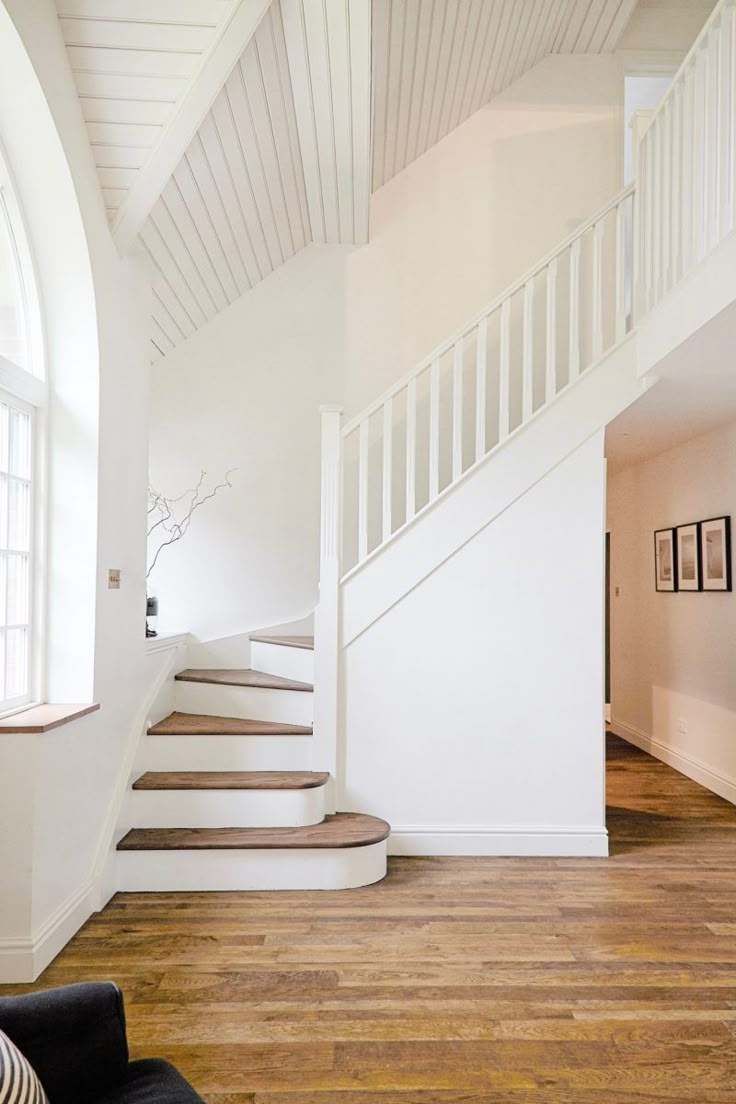
Figure 5: Winding Staircase
Why Choose a Spiral Staircase in Philadelphia?
The truth is, you can’t choose a spiral staircase for any place. But in some areas, it’s the best option. The reason behind this is not just because it’s beautiful and fancy. In a typical Philadelphia row house, space is tight, and homeowners often lack options to add more usable space.
One growing trend is the roof deck. It’s a perfect choice, but you need a staircase to access it. You have two options: build the staircase outside and access the roof deck from the backyard, or access it from inside the house. An outdoor staircase can be a good option from a space-saving perspective, but it has its own downsides. Exposure to weather makes it slippery and less safe, and privacy is limited because neighbors can often see directly into your yard.
So if you want the staircase inside, a spiral stair is the best choice. It’s not the main stair in your house; it’s just for roof access. It uses the least amount of space among all stair types, so you save valuable square footage. Additionally, when combined with a skylight or pilot house, it brings natural light into the home. And if it’s built professionally and designed well, it can act as a sculpture.
Here are other areas where a spiral staircase makes sense:
- Basements
- Lofts and mezzanines
- Attic access
- Secondary stairs
Code Requirements for a Spiral Staircase in Philadelphia
When planning a spiral staircase in Philadelphia, you must satisfy both national codes (IRC / IBC) and local amendments enforced by the Philadelphia Department of Licenses & Inspections (L&I). Philadelphia adopts the 2018 International Building Code (IBC) and 2018 International Residential Code (IRC), with some local adjustments. L&I enforces local safety provisions (e.g. handrail heights, structural safety) beyond the base codes.
Here’s what you need to know:
1. Spiral Stair as Means of Egress
Before using a spiral stair for egress, you must understand where it is permitted and where it is not, based on IRC, IBC, and Philadelphia amendments.
Permitted Use (IBC 1011.10):
- Spiral stairways are allowed as part of the means of egress only:
- Within individual dwelling units, or
- From a space ≤ 250 sq ft (23 m²) serving no more than 5 occupants, or
- From technical production areas per IBC Section 410.5
Residential Use (IRC):
- Spiral stairs are permitted inside individual dwelling units when they comply with IRC R311.7.10.1.
- Commonly used for basements, lofts, roof access, or third-floor additions in single-family homes.
Limitations:
- Spiral stairs are generally not permitted as the primary means of egress in commercial or high-occupancy buildings.
- Use in commercial settings is highly restricted and must meet specific IBC conditions.
2. Handrail and Guard Rules in Philadelphia
- Only one handrail is required on spiral stairways in Philadelphia.
- Handrail height: 34 to 48 inches measured vertically from tread nosing.
Projection (IRC R311.7.8.2):
- Maximum projection into stair width: 4½ inches (114 mm) on either side.
- Exception: Projection may increase to 6½ inches (165 mm) where nosings or landings reduce clearance, as long as minimum stair width is maintained.
- Handrail brackets or balusters:
- Not considered obstructions if they stay within 1½ inches (38 mm) of the handrail bottom.
- Larger handrails may slightly reduce this clearance per code formula. (For each 1/2 inch (12.7 mm) of additional handrail perimeter dimension above 4 inches (102 mm), the vertical clearance dimension of 11/2 inches (38 mm) shall be permitted to be reduced by 1/8 inch (3.2 mm)).
Clearance from Wall (IRC R311.7.8.3)
- Minimum clear space between handrail and wall: 1½ inches (38 mm).
Continuity (IRC R311.7.8.4)
-
- Handrails must be continuous for the full length of the stair flight.
- Must extend from directly above the top riser to directly above the lowest riser.
- Ends must return to the wall or terminate at a newel post or approved safety terminal.
- Exceptions:
- Continuity may be interrupted at:
- Newel posts
- Landings
- Winder turns
- Over the lowest tread
- Volutes or turnouts may terminate over the lowest tread.
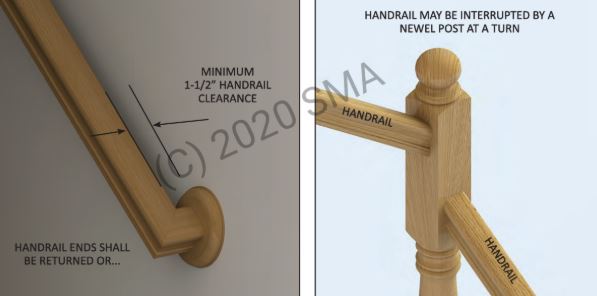
Figure 6: Spiral Staircase Handrail Clearance and Continuity
Grip Size (IRC R311.7.8.5)
There are two standard sizes when it comes to handrail grip size:
- Type I (Standard Graspable):
-
- Circular handrails:
- Diameter: 1¼” to 2″
- Non-circular handrails:
- Perimeter: 4″ to 6¼”
- Max cross-section depth: 2¼”
- Minimum edge radius: 0.01 inch
- Circular handrails:
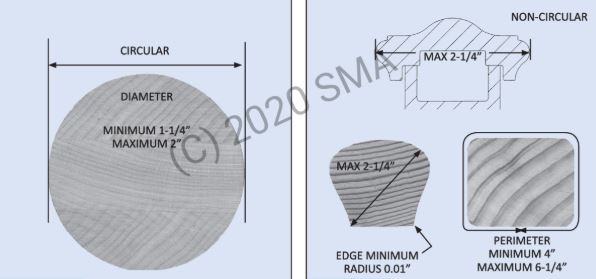
Figure 7: Spiral Staircase Handrail Grip Size
- Type II (Large Profile):
- Perimeter greater than 6¼”
- Must include finger recesses on both sides:
- Recess begins within ¾” of top
- Minimum depth: 5/16″
- Recess depth must continue for the required vertical distance
- Top width: 1¼” to 2¾”
- Minimum edge radius: 0.01 inch
Guards & Opening Limits (Residential)
- Guards on open sides of stairs:
- Openings must not allow a 4⅜-inch (111 mm) sphere to pass.
- Triangular openings at tread/riser/guard:
- Must not allow a 6-inch (152 mm) sphere to pass.
Important Note on OSHA vs IBC: IBC rules do NOT apply to warehouses, factories, or industrial workspaces. These locations fall under OSHA standards, not residential or commercial building codes. An IBC-compliant spiral stair is not automatically OSHA-compliant.
3. Dimensions
Before you pick a style or material, you must understand the dimensional constraints that make a spiral staircase both practical and code-compliant. Here’s what we work with according to the Philadelphia Residential Code Section R311.7.10.1 Spiral Stairways:
- Stairway Clear width (at and below the handrail): minimum 26 inches (660 mm).
- Tread depth: At the walkline, the depth should be at least 6.75 inches (171 mm) measured 12 inches from the narrow end.
- Rise height per step: Shall be no more than 9.5 inches (241 mm).
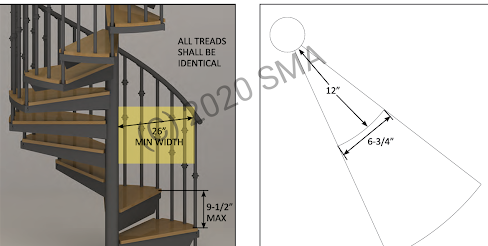
Figure 7: Spiral Staircase Dimensions
- Headroom: A minimum vertical clearance of 6 feet 6 inches (78 inches / 1,982 mm) above the tread leading edge in all parts of the stair.
- Walkline radius: typically no more than 24.5 inches (622 mm) from the center column.
- Uniformity: All treads must be identical in shape and dimension to avoid tripping hazards.
- The opening between adjacent treads is not limited on spiral stairways.
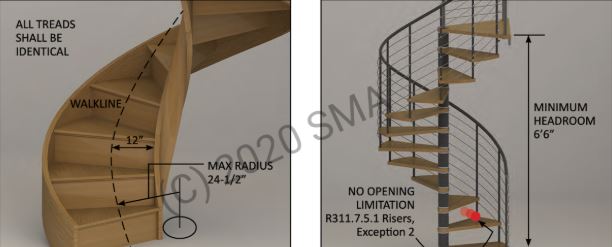
Figure 8: Spiral Staircase Dimensions
4. Permitting & Inspection
You’ll need a building permit from Philadelphia’s L&I for a new staircase, and your plans must show compliance with local stair code, structural calculations, and detailed handrail/guard designs. We at Matrix Construction take care of all these steps.
Spiral Staircase Ideas for Philly Homes
Here are 10 spiral staircase concepts we suggest for Philadelphia homes:
- Space-Saving Rowhouse Upgrade
Replace an old closed stringer stair with a compact spiral, freeing up floor area in narrow hallways. Perfect for vintage Philly trinity or shotgun houses. - Industrial Loft Look
Black powder-coated steel, open treads, and wood accents for warehouse-chic units in Fishtown or Northern Liberties. Pair with cable railings for a clean look. - Historic Charm Preservation
Use wrought iron balusters or scrollwork that echoes original elements. Powder-coat in matte black, bronze, or muted tones to blend with exposed brick. - Outdoor Roof Deck Access
A galvanized or hard-coated steel spiral stair up to a rooftop deck. Built to resist weather and pass code for secondary egress. (Remember height restrictions for roof deck structures in Philly.)
- Floating Wood Tread Spiral
Warm, thick wood treads with open risers on a slender column frame. Brings warmth to an otherwise industrial look. - Split-Level Connector
Use the spiral to link the basement to the main, or main to the roof, where a full stair would eat too much space. - Accent Staircase as Sculpture
Use bold colors, curved handrail detailing, or integrated LED strip lighting to make the spiral a visual focal point rather than just functional. - Spiral Stair with Skylight Above
Situate the spiral under a roof hatch or skylight. Let daylight cascade down the spiral, especially powerful in narrow urban interiors.
Real-life example: The Tilton pilot house project featured a spiral staircase beneath a skylight, combining structure, light, and elegance (see “12 Benefits of Using a Sunlight Pilot House”).
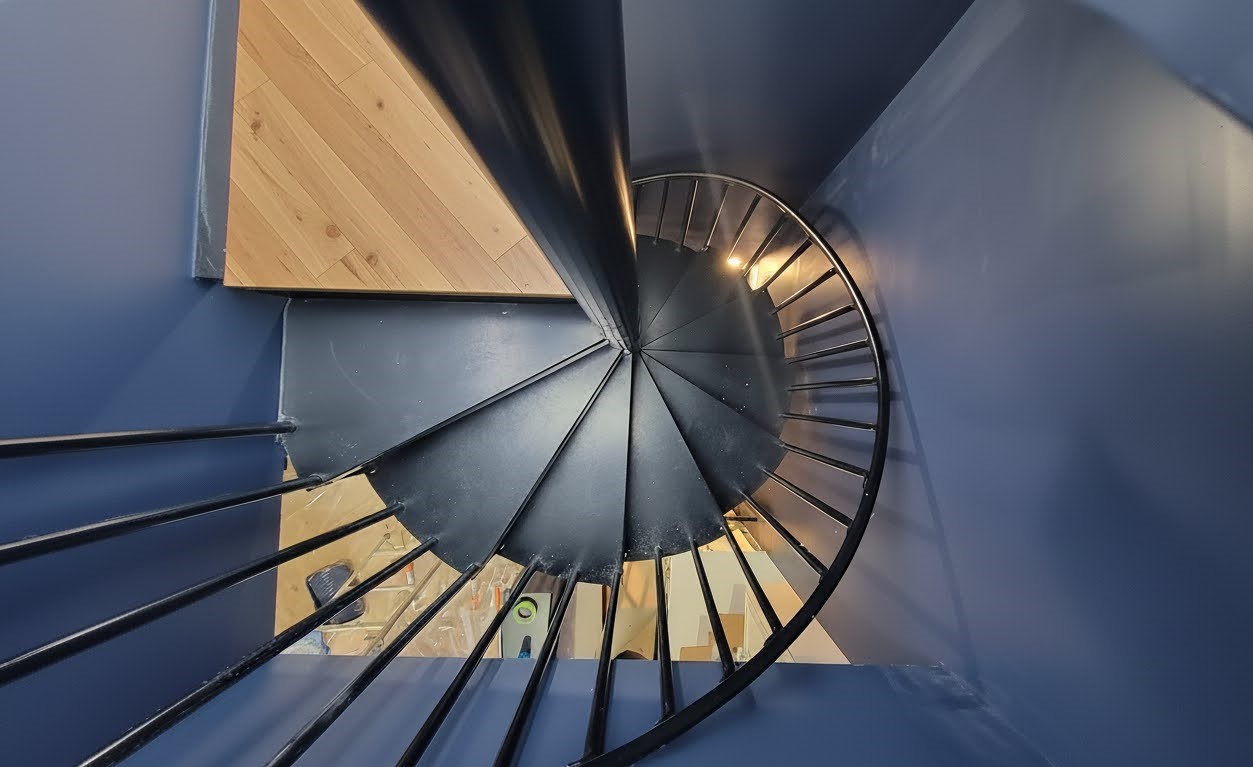
Figure 10: Spiral Staircase in Philadelphia
Spiral Staircase Design Consideration
Placement and Framing
Designing a spiral staircase involves careful planning to ensure comfort, safety, and functionality.
- First, the placement of the first and last steps is crucial; the bottom step and top landing should align with how people move through the space. Poor placement can make the stairs uncomfortable and unsafe.
- In tight spaces like Philly rowhouses, you should never reduce the hallway width to less than 36 inches to maintain proper circulation.
- When framing the stair opening, always leave a 2 to 5-inch buffer on each side to account for walls, finishes, and hidden elements that will take up space later on.
- If the spiral stair provides access to a roof deck, plan the skydoor opening early to ensure proper headroom, framing, and structural alignment. Keep in mind that roof slope and floor finishes (e.g., tile or hardwood) affect the total height, so these should be calculated from the start.
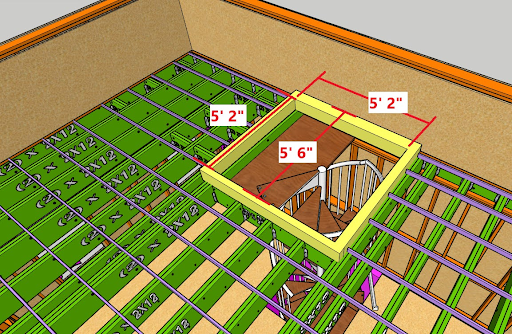
Figure 9: Spiral Staircase Roof Deck Opening
- Riser consistency is essential for safety; all risers must be identical to avoid inspection failures. If you’re using spacers, the total height must be divided accurately by the number of steps.
- Aligning the stair opening on each floor is crucial for installation; even small misalignments can create big problems.
Installation, Structure, and Safety
- Spiral stairs require precise framing and installation. Stackable spiral stairs are easier to install and align, but if using a non-stackable system, the floor structure must be reinforced to support both live and dead loads.
- When designing the stairwell, account for the ½-inch thickness of sheetrock inside the opening to ensure a clean fit once the walls are finished.
- Color, tread material, and handrail finish should also be confirmed early to avoid surprises.
- During installation, check all parts when the stairs arrive to ensure nothing is missing.
- Framing should be done by an experienced professional who understands the unique requirements of spiral stairs. The structure must be properly anchored to the floor and wall to prevent any movement. Cutting and welding of the stair components must be clean and precise, avoiding damage to the floors and walls.
- Precise measurements are critical, spiral stairs are unforgiving, and even small mistakes in radius or height can cause binding or misalignment.
- The center pole must be anchored securely at the bottom and tied into the structure at the top to prevent wobbling.
- Ensure there is a minimum headroom of 6′-6″. This may require cutting joists, adjusting decks, or relocating HVAC and plumbing.
- Spiral stairs, even as secondary means of egress, must meet building and fire code requirements. Inspectors will check the stair width, handrails, and overall safety.
Due to their tight configuration, large furniture and appliances may not fit through a spiral staircase, so homeowners should plan accordingly for these limitations.
Conclusion
A spiral staircase in Philadelphia offers beauty, space efficiency, and bold style, but only when designed smartly and built to code. At Matrix Construction, we guide clients through:
- Dimensional constraints and structural demands
- Local and national code requirements in Philly
- The practical challenges we manage behind the scenes
- Which projects are great candidates for a spiral
- Creative, site-specific spiral designs
If you’re considering a spiral stair in your Philadelphia home, we’d love to map it out with you, review your floor plan, and see whether this sculptural element can become your functional centerpiece. Contact us now for a FREE Consultation!
Planning a project in Philadelphia or South Jersey?
MatrixGC is a licensed Philadelphia general contractor (#43984). Learn about our 3rd floor additions and roof decks, see Home additions, or get a free estimate. Call (215) 501-7566.


0 Comments