
Navigating the requirements for Philadelphia building permits is the foundational step for any construction project in the city. Whether you’re a homeowner planning a renovation or a developer embarking on a new build, understanding this process is crucial for ensuring your project is legal, safe, and successful. This comprehensive guide breaks down everything you need to know.

What Are Philadelphia Building Permits and Why Are They Mandatory?
A building permit from the Philadelphia Department of Licenses and Inspections (L&I) is official authorization to begin construction, alteration, or repair work. The core purpose is public safety—ensuring all projects comply with current building, fire, electrical, and structural codes.
Think of the permit process as a three-phase review:
- Plan Review: L&I examiners check your project plans for code compliance before any work starts.
- Permission to Proceed: The issued permit is your legal green light to begin construction.
- Inspections: City inspectors visit the site at critical stages to verify the work matches the approved plans.
Skipping the permit process can lead to severe penalties, including fines, stop-work orders, and complications when selling your property. More importantly, unpermitted work may pose serious safety risks.
Do You Need a Permit? Philadelphia’s Common Project Checklist
Confusion often arises about which projects require a permit. Here’s a clear breakdown based on the Philadelphia Building Code:
Projects That Typically REQUIRE a Building Permit:
- New construction (homes, additions, decks, detached garages).
- Structural alterations (removing load-bearing walls, modifying roof structures).
- Major system work (new or altered electrical, plumbing, HVAC).
- Finishing a basement or attic to create habitable space.
- Building a porch, deck, or balcony.
- Demolition of any structural element.
Projects That Typically DO NOT Require a Building Permit:
- Cosmetic updates like painting, wallpapering, or installing flooring.
- Replacing kitchen cabinets or countertops without altering plumbing.
- Installing a prefabricated shed under 200 square feet (check zoning).
- Minor repairs like replacing a roof shingle or a section of siding.
Critical Note: Even “cosmetic” projects may need a permit if they involve changes behind walls. If you’re unsure, consulting with a professional or using the city’s Permit Navigator tool is the best course of action.
The Philadelphia Building Permit Process: A Step-by-Step Overview
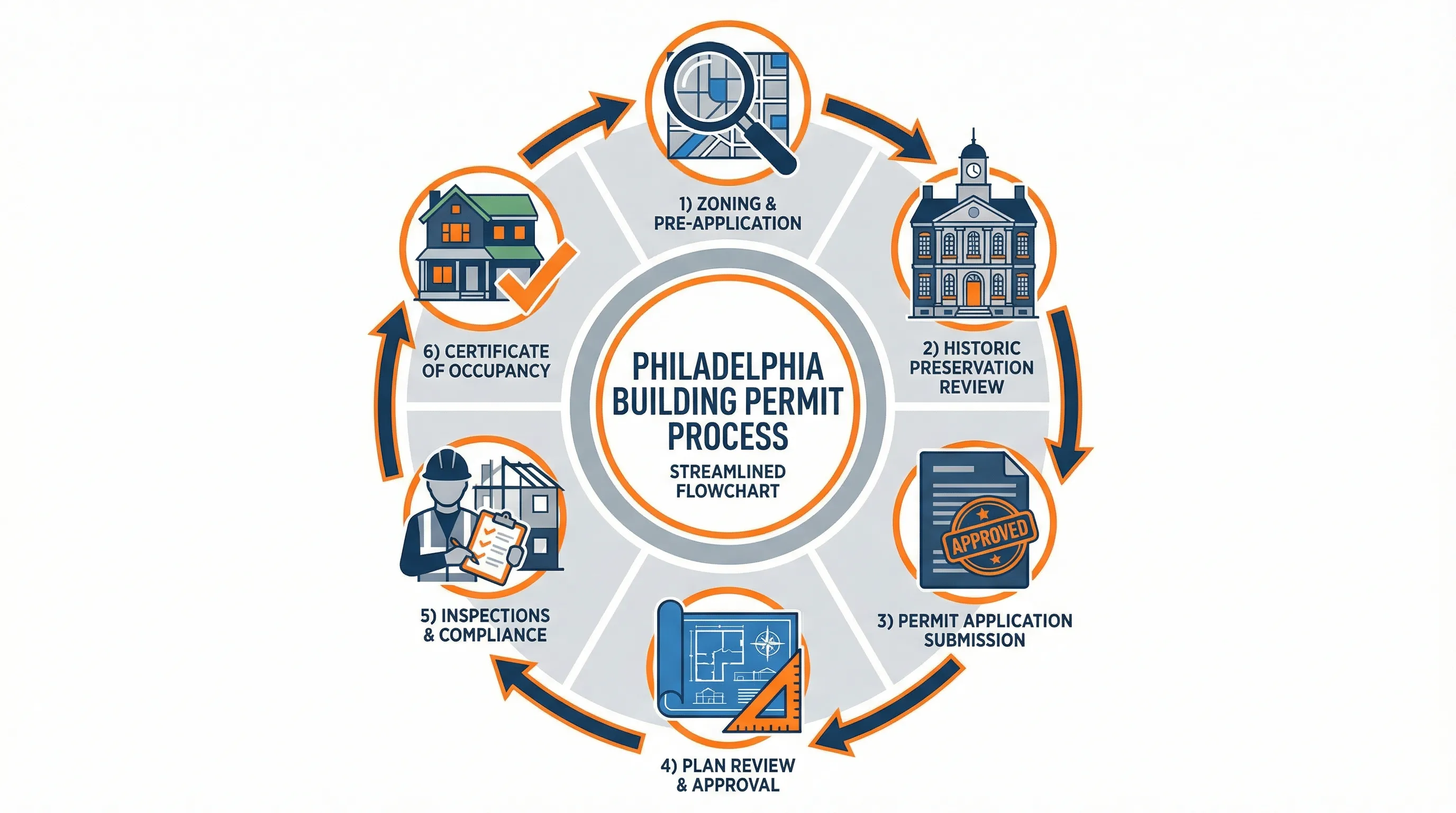
The journey to secure your Philadelphia building permits involves several key stages. Being prepared for each one is the secret to avoiding delays.
Step 1: Secure Pre-Approvals (The Most Common Hurdle)
Before L&I will even accept your building permit application, you often need other city approvals:
- Zoning Permit: Verifies your project complies with land-use rules (setbacks, height, property use). This is almost always step one.
- Historical Commission Approval: Absolutely mandatory if your property is in a historic district. L&I will reject your application without it.
- Other Departments: Projects impacting the sidewalk (Streets Dept.) or water systems (PWD) may need separate sign-offs.
Step 2: Prepare and Submit Your Application
All applications are submitted through the city’s eCLIPSE online portal. A complete application packet usually includes:
- Completed permit application forms.
- Detailed construction drawings (often stamped by a licensed PA architect or engineer).
- Proof of property ownership.
- Your approved Zoning Permit.
- Contractor information (license, insurance, tax clearance).
Step 3: City Review & Timeline
After submission, L&I examiners review your plans:
- Standard Review: Takes approximately 15-20 business days.
- Accelerated Review: For an additional fee, review time can be reduced to about 5 business days.
It is very common to receive “review comments” requesting clarifications or plan revisions, which will add time to the process.
Step 4: Permit Issuance, Inspections, and Final Approval
Once approved and fees are paid, you can print your permit. The work doesn’t end there:
- Post the Permit: Display it clearly at the job site.
- Schedule Inspections: Call 311 or schedule online for critical stage inspections (footing, framing, rough-in, final).
- Obtain Final Sign-Off: After passing the final inspection, you’ll receive a formal approval. For new units or change-of-use, this culminates in a Certificate of Occupancy.
What Factors Impact Your Permit Timeline and Cost?
Two of the biggest questions are “How long?” and “How much?” The answers vary widely.
Understanding the Real Timeline
While L&I’s review clock might be 15-20 days, the total timeline from deciding to build to holding your permit is often 4 to 8 weeks or more. Delays are caused by:
- Incomplete applications or missing pre-approvals.
- Complex project designs that require multiple revision cycles.
- Backlog at city departments.
- Neighbor objections or zoning appeals.
Understanding the Costs
Costs aren’t just the permit fee. Budget for:
- Permit Fees: Usually based on the project’s estimated cost.
- Zoning & Other Permit Fees: Each application has its own cost.
- Professional Fees: Architects, engineers, and expeditors.
- Accelerated Review Fees: If you choose to pay for faster service.
Partnering with Experts: The Path to Smoother Permits
As you can see, the process for securing Philadelphia building permits is detailed and requires navigating multiple city departments. For most homeowners and business owners, managing this alone is a significant source of stress and a common cause of project delays.
This is precisely why many successful projects rely on experienced professionals. A knowledgeable contractor doesn’t just build—they guide you through the entire regulatory maze, ensuring your application is complete, compliant, and positioned for approval.
Overwhelmed by the process? There’s a better way. At Matrix Construction, we help Philadelphia property owners navigate these exact challenges every day. Learn more about our streamlined process and how we can handle the entire permit application for you.
Ready to move forward with confidence? Contact us today for a free consultation about your project. Let’s discuss how we can turn your vision into reality, starting with securing the necessary Philadelphia building permits efficiently and correctly.





![A Comprehensive Guide to the Hierarchy of Using Building Codes in Philadelphia [2025]](https://matrixgc.com/wp-content/uploads/2025/04/Hierarchy-of-Using-Building-Codes-in-Philadelphia-blog-article-400x250.jpg)
0 Comments