
Philadelphia is a city steeped in history, with homes that boast timeless charm and architectural beauty. From stately rowhouses to grand Victorian-style dwellings, these historic homes remain highly sought after by homeowners who appreciate authenticity. However, living in a historic house often comes with unique challenges; one of the most critical being outdated electrical systems.
Renovating these homes usually involves modernizing essential systems while preserving the structure’s character. Among these upgrades, the need to upgrade old electrical wiring stands out as a top priority. Outdated wiring can pose serious safety risks, limit your home’s functionality, and affect your ability to incorporate modern technology. In this article, we’ll explore why upgrading old electrical wiring in Philadelphia’s historic homes is essential, what it involves, and how you can do it safely and effectively.
Philadelphia Historic Houses and Upgrading Old Electrical Wiring
Historic homes are not just buildings; they are pieces of living history. While the original electrical wiring may have been state-of-the-art at the time of construction, many houses built before the mid-20th century have wiring that cannot safely support today’s modern electrical demands.
Philadelphia rowhouses, brownstones, and Victorian homes often feature outdated systems such as knob-and-tube wiring, ungrounded circuits, or undersized fuse boxes. These systems were never designed for the array of high-powered appliances, smart devices, and home office setups common in modern households.
Upgrading old electrical wiring in these homes is not just about functionality; it’s a critical safety measure. Faulty or overloaded wiring can result in electrical fires, shocks, and costly damage to your home. Additionally, homes with outdated electrical systems often fail inspections, which can complicate home sales or refinancing.
The Dangers of Outdated Electrical Wiring
Outdated wiring carries a range of hazards that are often underestimated. The most common risks include:
- Fire hazards: Old wiring, especially aluminum or knob-and-tube, may overheat or degrade over time, increasing the risk of fires.
- Electrical shocks: Ungrounded or frayed wires can expose residents to electric shocks, particularly in kitchens, bathrooms, or outdoor areas.
- Circuit overloads: Modern appliances draw significantly more power than older wiring systems can handle, often causing breakers to trip or fuses to blow.
- Insurance issues: Many insurance companies will not fully cover homes with outdated electrical systems, leaving homeowners vulnerable.
Understanding these dangers emphasizes why it is essential to upgrade old electrical wiring in any historic home in Philadelphia.
How to Know if You Need to Upgrade Old Electrical Wiring
If you’re wondering if your home’s electrical wiring needs an upgrade, check below. If any of these signs are present, it is time to consult a licensed electrician to upgrade old electrical wiring safely.
1.Age
The age of your home is often the first indicator. Houses built before the 1950s may contain wiring systems that are no longer safe or efficient. If your home still relies on a fuse box or knob-and-tube wiring, it’s likely time to consider a full or partial electrical upgrade.
2. Frequent Breaker Trips or Blown Fuses
This happens when you have too many receptacles or devices on a particular circuit, or too many things like space heaters, hair dryers, or microwaves drawing more power than the circuit (meaning either the breaker or the wire) can safely handle. That can create a serious hazard where you could overload the system and start a fire. Older homes were often designed for around 60 amps, but average modern households typically need 200 amps. Just replacing the breaker with a higher capacity one without updating the wiring is a mistake, as the existing wiring likely can’t handle the increased load. Reduce the number of devices on the circuit. For older homes, a wiring upgrade might be necessary to meet modern electrical demands.
3. Outdated Electrical Panels
Electrical panels really do have an expiration date. It won’t be printed on the panel itself, but eventually, when they get too old, they become unsafe, and that’s an electrical red flag. An outdated panel should be upgraded.
4. Flickering or Dimming Lights
Dimming or flickering lights are also a visible clue. If a light flickers or turns dim when you switch on another appliance, or if it happens randomly in one or multiple areas of your home, it suggests your wiring can’t meet the circuit demands.
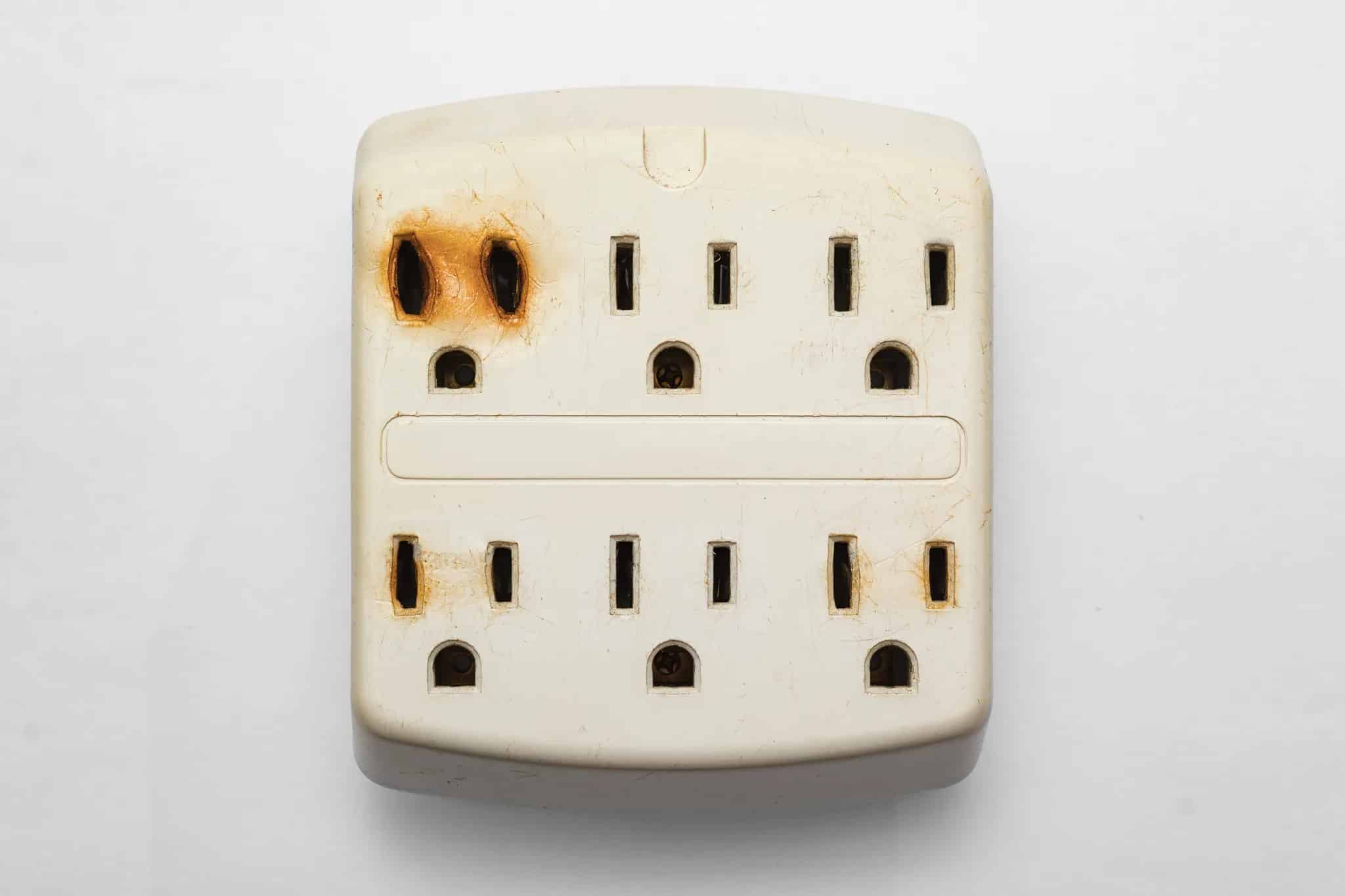
5. Discolored or Hot Outlets
You should also pay attention to how your outlets or switches feel. If they are hot to the touch, stop using them immediately and call a professional, as this is a potential fire hazard. Similarly, discolored outlets that show burn marks indicate that your wiring or circuits are carrying too high an electrical load, leading to excessive heat. Continuing to use these lines can result in outlet failure, power outages, sparking, and fires.
6. Not Having Enough Outlets
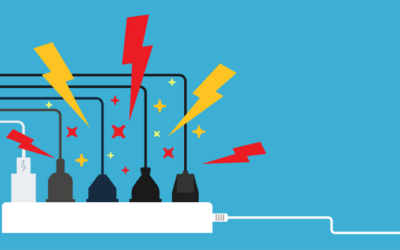
This can also signal a need for an upgrade. If you find yourself relying on an excessive number of power strips, it’s not just inconvenient but also a safety hazard if your wiring can’t handle it. Upgrading allows for more properly grounded outlets throughout your home.
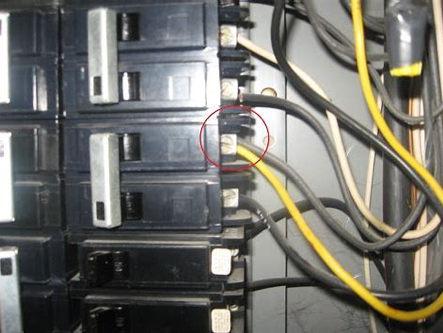
7. Double-Tapped Circuit Breakers
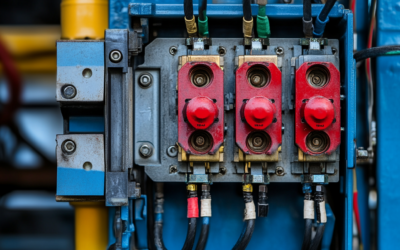
A circuit breaker in your panel should only have one black wire coming out of it to feed one circuit. But sometimes, when people run out of room, they try to stick two wires in there because they want to run a new circuit. Now, that is a red flag. You do not want to be using one breaker to handle two circuits in your house.
8. Unsafe Aluminum Wiring
If your home was built between the late 60s and early 70s, it might have aluminum wiring. The real red flag here is if that aluminum wiring hasn’t been made safe. Connections can loosen, corrode, overheat, and even cause fires.
You need to pigtail the aluminum wiring with copper. You can use alumicons, or if you use wire nuts for pigtailing, they need to have a special grease inside to help with conduction. Another option is to purchase and install outlets and switches specifically made to work well with aluminum wiring. But still, rewiring is the best option.
9. Improperly Wired Outlets
You might see reverse polarity, which means the black wire is on the silver screw and the white wire is on the brass or gold screw. That shouldn’t be wired that way! You might also see someone trying to “jump” an outlet by putting two wires on the same screw. That is a red flag, a fire waiting to happen when that thing slips off. That’s a serious issue. If you happen to see this, you need to correct it right away.
10. Exposed Wiring
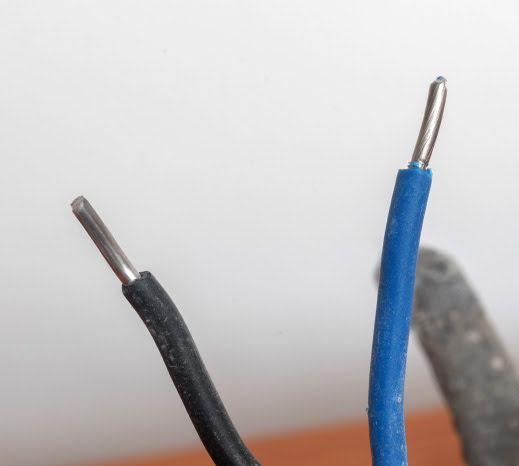
If you have any situation where you can see wiring from within the room, maybe there’s no outlet cover, or the insulation on a wire is stripped too far back exposing the copper. That’s an electrical hazard and something that needs to be taken care of. This needs immediate attention and should be taken care of.
11. Missing or Damaged GFCI Outlets
Your circuits in kitchens, bathrooms, or any wet areas should have a GFCI outlet. That GFCI needs to be installed as the first receptacle from the breaker panel because it protects the others down the line. They also have a test button, so you should be testing your GFCIs every once in a while to make sure they work. If it’s not turning off properly, or breaking the circuit, then you need to replace it. If you don’t have a GFCI in a bathroom, you need to install one to prevent a shock.
12. Lack of Arc Fault Circuit Interrupters (AFCIs) in New Homes
These are specific types of breakers in your panel that have a little blue button. They trip if they sense any serious fluctuation in current or a little blip, assuming there’s some kind of hazard happening down the line. If you’ve got a brand new home, you’re supposed to have these in there. If you don’t, I wouldn’t call it a hazard, but it’s a red flag for an inspector. These should be installed as part of a renovation.
13 . Improper Junction Boxes
What’s an improper junction box? It’s one where you have wires twisted together and spliced, but they’re not in a covered box. That’s improper. Or maybe it’s inside a box, but the box isn’t covered. Or, even worse, the wires are being contained in something not made for electrical circuits, like a wooden box. All wire splices must be properly contained within a covered, electrical-rated junction box.
14. Lack of Proper Grounding
This is common in older homes where maybe the panel itself isn’t grounded properly, or you might not have a ground wire in the wiring at all. That’s a huge red flag as well. Sometimes, we’ve even seen situations where the ground wire is improperly used as a neutral wire, meaning you actually have no ground. Each receptacle and each circuit needs to be properly grounded.
15. Improper Use of Extension Cords
This can happen when someone uses an extension cord instead of proper Romex wire as a permanent solution. Also, they might cut off the plug and splice it directly into an outlet or it’s used to power an entire circuit instead of just temporarily plugging in a device. That would be a red flag. Extension cords should only be used temporarily for plugging in devices, not as permanent wiring.
16. Non-Operational or Expired Smoke Detectors
Making sure your smoke detectors are operational and functioning is vital. If they’re battery-operated, ensure you have good batteries in there, and use the test button. Also, check for an expiration date on the smoke detector itself; if it’s past its expiration, then you need to replace it.
17. Incorrect Wire Gauge
You’ll see this where you might have a 20 amp breaker in your panel, but instead of using, for example, 12 gauge wire for that circuit, someone’s used 14 or 16 gauge, which is smaller and shouldn’t be carrying that kind of a load. This can lead to the wire overheating and causing a fire inside your wall. While running new wire of the correct gauge is ideal, if that’s difficult, you must downsize the breaker to protect the existing wires and prevent a fire inside your wall.
18. Knob and Tube Wiring
This is a very old type of wiring, typically found in old Philadelphia Homes. With knob and tubing, you usually don’t even have a ground, and the insulation on the wires isn’t like the rubber insulation we use today; it’s a material that will fray over time. These things are going to be a red flag. If you’ve got knob and tube wiring, you want to replace it right away. That’s got to be on your list. If you’re looking at a home with it, you need to factor in those costs, especially if you’re getting an FHA loan, as it might not pass inspection. This is a major red flag and should be replaced right away.
19. Improperly Installed Ceiling Fans or Heavy Light Fixtures
This isn’t necessarily about the wiring being improper, but it’s a hazard where the fixture could come down if it’s not properly supported in the ceiling. It needs a bracket that attaches to the ceiling joists, not just drywall, to support the weight. Otherwise, you’re just going to have your drywall trying to hold it up. So, the hazard here is really about the support for the fixture, not so much the wiring itself.
20. Spliced Wires Without Wire Nuts or Connectors
This happens on occasion. Sometimes it’s intentional, sometimes it just comes off because it wasn’t done properly. But if you’re taking an outlet cover off and you pull it out and see two wires twisted together with no wire nut on them, then it’s a problem. You’ll want to pull it all out, check all the wire nuts, and reinstall one where needed to ensure secure connections.
21. Burn Marks or Scorching on Outlets/Light Switches
If you see burn marks, discoloration, or scorch marks coming from your electrical outlets or light switches, take it seriously. You want to immediately inspect it and likely change that outlet or light switch right away, because something has occurred in a bad way. You need to investigate, rewire it, put in a new outlet or switch, rewire it properly, test it, and make sure it’s safe.
22. Light Switches That Don’t Control Anything
If you’ve got a light switch you’re flipping on and off, and it’s not turning any lights on, maybe it’s controlling an outlet. You can use an outlet tester in the room’s outlets and then flip the switch to see if it powers anything. If the lights are already on and the switch is doing nothing, I’d turn off the breaker for that switch, pull it out, check the wiring, and if everything looks proper, you can try replacing the light switch to see if that makes a difference.
23. Outdated Two-Prong Outlets
These are older outlets that don’t have the little circular hole at the bottom for the ground. At the time, the plugs on devices didn’t have that ground position, so outlets only had two prongs. But today, especially if you want to plug in modern fixtures, you’re going to need a traditional, up-to-date, to-code outlet. If you’ve got two-prong outlets, just change them right away, as soon as you see them in your house or when you’re moving in, just get it done. Sometimes new faceplates are installed to make them look like three-pronged outlets without actual grounding, which is dangerous for modern appliances.
24. Improperly Installed DIY Wiring
Let’s clarify this once and for all: Electrical works are NOT DIY jobs! You might see signs of DIY wiring that wasn’t done properly. This could include J-hooks on screws going the wrong direction (counter-clockwise instead of clockwise). Also, you might have an outlet where the plate cover is on, but the outlet itself is recessed too far back, and you can see a big gap in there. These are little tips that show somebody has done their own wiring.
If you see any of the above signs, that means you need to partially or fully upgrade old electrical wiring. It’s really about making sure your home’s electrical system isn’t trying to run a modern, high-demand household on an outdated, fragile infrastructure. You need that reliable, robust system to keep everything safe and running smoothly.
What Does an Electrical Wiring Upgrade Involve?
Upgrading old electrical wiring is not a DIY task. It requires careful planning, proper tools, and knowledge of local building codes. A professional electrician will typically perform the following steps:
1. Electrical System Assessment
The first step in any upgrade project is a comprehensive inspection. A licensed electrician will evaluate your existing wiring, breaker panel, outlets, switches, and overall system. The goal is to identify safety risks, outdated components, and code violations. This assessment helps create a plan for either a partial or full upgrade.
2. Full vs. Partial Rewiring
Not every home requires a complete rewiring. Depending on the assessment, electricians may recommend:
- Partial rewiring: Replacing circuits, grounding outlets, or upgrading specific sections of the home while leaving other wiring intact.
- Full rewiring: Recommended for homes with aluminum or knob-and-tube wiring, or for extensive renovations. Full rewiring ensures your electrical system can safely handle modern power demands.
In Philadelphia, historic homes often benefit from full rewiring, especially when preparing for modern amenities like EV chargers, home theaters, or advanced kitchen appliances.
3. Breaker Panel Upgrades
Older homes may still use fuse boxes or undersized breaker panels. Modern households require more power, and a panel that is too small can lead to frequent outages or unsafe conditions. Upgrading the breaker panel involves installing a new panel that can accommodate higher amperage and additional circuits.
4. New Outlets, Switches, & Fixtures
Another key part of upgrading old electrical wiring is replacing outlets, switches, and fixtures. Common updates include:
- GFCI outlets: Required in kitchens, bathrooms, and outdoor areas to prevent shocks.
- Tamper-resistant outlets: Increases safety for homes with children.
- Smart switches and dimmers: Enhances convenience and energy efficiency.
- Additional outlets: Reduces the need for extension cords and prevents circuit overload.
By installing modern outlets and switches, your home becomes safer, more functional, and more energy-efficient.
5. Code Compliance & Permits
One of the most important steps is ensuring that all work is up to code. Licensed electricians will handle permitting and inspections to comply with local Philadelphia and national electrical codes. Proper documentation also ensures insurance coverage and resale value.
Upgrade Old Electrical Wiring Costs
The cost of upgrading old electrical wiring in historic Philadelphia homes depends on multiple factors:
- Scope of the project: Partial rewiring is less expensive than full rewiring.
- Home size and complexity: Larger homes or those with multiple stories require more labor and materials.
- Type of materials: High-quality breakers, wiring, and fixtures cost more but provide better long-term value.
- Permits and inspections: Required by Philadelphia’s L&I and included in the overall budget.
According to the HomeAdvisor, “You can expect to pay around $3 to $5 per square foot. So, while it costs $2,400 to $4,000 to completely rewire an 800-square-foot home, a similar project on an expansive 3,000-square-foot property could run as high as $15,000.” Although costs vary significantly depending on home size and condition. A licensed electrician can provide a detailed estimate based on your home’s needs.
Tips for Homeowners Before Upgrading Old Electrical Wiring
- Hire a licensed professional: Electrical work in historic homes is complex. Always work with an experienced electrician.
- Plan for the future: Consider future technology needs, such as electric vehicle chargers, home offices, and smart home devices.
- Prioritize safety: Never ignore signs of electrical trouble. Upgrading old electrical wiring is an investment in safety and peace of mind.
- Document upgrades: Keep permits, inspection reports, and receipts for insurance and resale purposes.
Conclusion
Historic homes in Philadelphia offer unmatched charm and character, but living safely in these homes requires modernization, especially when it comes to electricity. Upgrading old electrical wiring is a crucial step in ensuring safety, meeting modern power demands, and preserving your home for years to come.
Whether you’re renovating a rowhouse, Victorian mansion, or brownstone, don’t underestimate the importance of a safe, modern electrical system. If you’re looking to upgrade old electrical wiring in Philadelphia or South Jersey, trust a licensed professional to handle your historic home with care.
For expert advice, estimates, and renovation services, contact Matrix Construction via our FREE Consultation form. Modernize your home safely while preserving its historic charm!




0 Comments