
Stain Vs. Polyurethane for Hardwood Floors: A Comprehensive Guide
Flooring…yes, we’re talking about flooring again! Why? Because the moment someone steps into your home, the floors are one of the first things they notice. Today, we’re diving into refinishing hardwood floors with stain vs. polyurethane. If you have a historic home with beautiful hardwood floors and want to bring back its natural shine, this article is for you.
In this article, we discuss stain vs. polyurethane, two popular refinishing materials, for hardwood floors thoroughly. So let’s begin!
Refinishing Vs. Replacing Hardwood Floors
The first question that comes to your mind is: Why refinish a hardwood floor when you can replace it with new flooring?
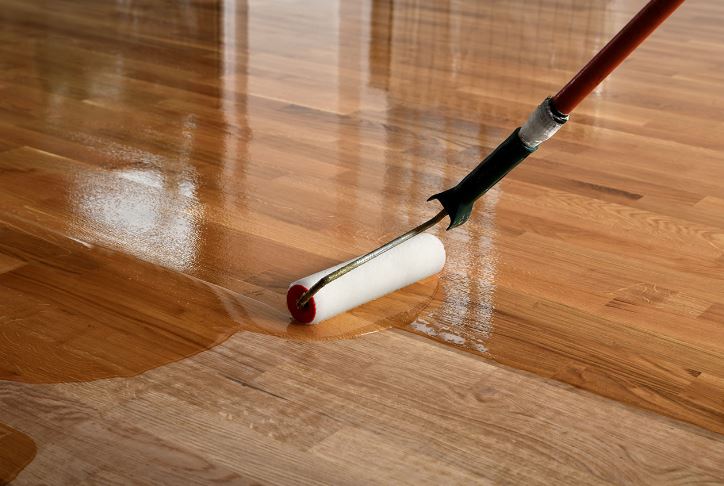
To respond to this question, first, let me explain what refinishing is exactly. Floor refinishing is the process of restoring a wood floor’s appearance and protective finish by sanding down to the bare wood, applying new stain (if desired), and sealing with a new finish. But wait, don’t confuse it with resurfacing. It’s a more involved process than resurfacing, which only addresses the top layer of the finish.
On some occasions, you don’t really need to replace your hardwood floors; refinishing can give you the look you want for your flooring.
So, when does refinishing make sense?
- Refinishing is ideal for floors with deep scratches, gouges, or water damage
- When you want to change the floor’s appearance but don’t want to spend a lot of money on replacing it
- When you own a historic house, and you don’t want to lose the charm and beauty of the original hardwood floors
And here in Philadelphia, with so many historic buildings, refinishing is not just practical; it’s a favorite choice for homeowners looking to bring old floors back to life.
Refinishing Materials: Stain vs. Polyurethane
When it comes to hardwood floor refinishing, choosing the right materials can make all the difference. Let’s dive into the two most popular options and see how they work, when to use them, and what makes each one unique. This way, you’ll have a clear idea when deciding between stain vs. polyurethane.
1. Stain
Purpose:
Stain is all about color. It penetrates the wood to enhance its natural grain while giving it a fresh, vibrant hue. Whether you want a rich dark tone for a dramatic effect or a light shade to brighten up a room, stain allows you to customize your floor’s look without changing the texture of the wood.
Types:
- Oil-based stains: Deeply penetrate the wood and offer long-lasting color. They give a warm, classic finish but take longer to dry.
- Water-based stains: Dry quickly, have lower odor, and come in a wide variety of colors. They’re easier to clean up but may require a bit more effort to achieve an even finish.
- Gel stains: Thick and perfect for uneven or old hardwood floors where traditional stains might soak in inconsistently.
Method:
Applying stain involves a few key steps:
- Sand the floor down to bare wood.
- Wipe away dust and debris.
- Apply the stain with a brush or rag, following the wood grain.
- Wipe off excess stain.
- Let it dry completely before adding a protective finish, like polyurethane.
2. Polyurethane
Purpose:
Polyurethane isn’t about color, it’s about protection. It creates a hard, durable layer on top of your hardwood floors that guards against scratches, spills, and daily wear. It’s what gives your floors that glossy, polished look that lasts for years.
Types:
- Oil-based polyurethane: Offers a rich, amber tone and excellent durability, but it takes longer to dry and has a stronger smell.
- Water-based polyurethane: Clear finish that dries fast and has low odor. It’s perfect if you want to preserve the natural color of your wood while adding strong protection.
Method:
Applying polyurethane requires patience for the best results:
- Sand the floor smooth after staining (if you used stain).
- Wipe the floor clean.
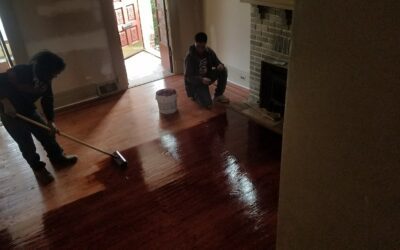
- Apply a thin, even coat with a brush or roller.
- Let it dry completely, then lightly sand between coats for a flawless finish.
- Repeat for 2–3 coats, depending on the desired level of durability.
You can read a detailed guide on applying polyurethane here.
3. Stain + Polyurethane (All-in-One)
There are also all-in-one stain + polyurethane products for a faster and simpler approach. The big advantage of this product is that it helps you to reduce the number of coats and save time compared to using stain and polyurethane separately.
However, all-in-one products can be a bit trickier to apply evenly, and they may not offer as deep a color or as durable a finish as applying stain and polyurethane separately. Still, for many homeowners, especially those looking for a quick and effective update, they are a convenient solution.
So when thinking about stain vs. polyurethane, remember that you now also have the option of a combined stain + polyurethane product, which lets you both color and protect your floors in one go.
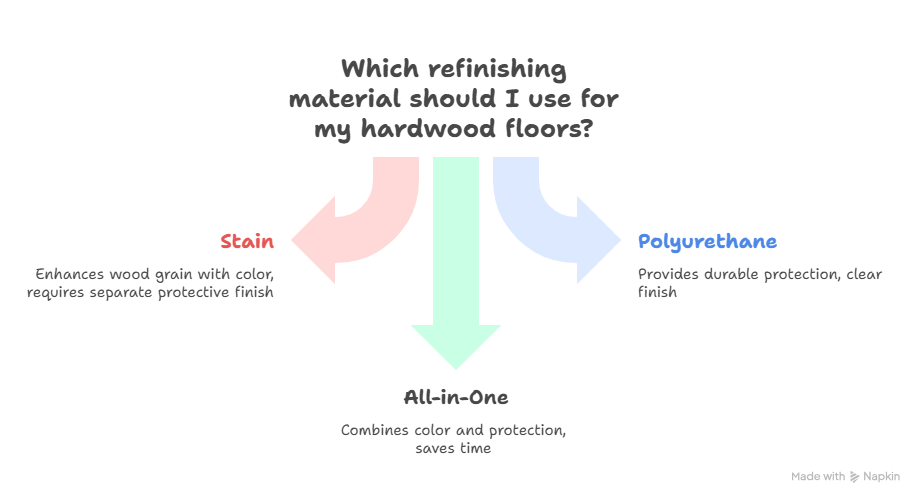
Which One Should You Pick?
When it comes to choosing between stain vs. polyurethane for hardwood refinishing, you need to factor in a few items:
- What you want for your floors
- Budget
- Time
If you want color first:
Go for stain. Especially if your hardwood floors are from a historic Philly rowhouse, stain is your best friend for bringing out that old-world charm. You can pick a color that highlights the wood’s grain and complements the rest of your home’s style. Keep in mind, you’ll still need a protective topcoat, like polyurethane, to keep the floors looking fresh for years.
If protection is your priority:
Polyurethane is your go-to. Floors that see a lot of foot traffic, think busy kitchens, living rooms, or even a home office, benefit from that strong, clear protective layer. Water-based polyurethane keeps the natural color of the wood, while oil-based gives it that warm, amber glow that’s perfect for traditional hardwoods.
If you want to save time and effort, an all-in-one stain + polyurethane is your shortcut.
No matter which path you take, refinishing your floors will make a huge difference the moment someone walks into your home. That “wow” factor? Guaranteed.
Tips to Watch Out For
If you do a quick search for mistakes to avoid while refinishing floors, you’ll find tons of information. But tips coming from practical experience are worth considering even more. According to our experience refinishing floors at Matrix Construction, we highly recommend that you pay attention to the tips below, whether you refinish your floors yourself or hire someone else.
Number of Coats: Don’t underestimate the importance of layers. Always follow the manufacturer’s instructions. If the manufacturer says to apply three coats, do not apply only two. Also, make sure your contractor sticks to this rule as well. You may not notice the difference at first, but it affects the durability of your hardwood floor.
Drying Time: It’s important to note that different types of materials need different drying times. Oil-based materials typically require more time to dry. You need to stick to the manufacturer’s instructions. Sometimes people try to speed up the process, but be aware that this can completely ruin your floor.
Material Type and Brand: Here’s an interesting one! When you hire someone to refinish your floors, make sure to check the materials they use. Sometimes they say the stain includes polyurethane, but it doesn’t. This means your floor ends up with no protection!
Conclusion
By now, you’ve learned a lot about stain vs. polyurethane for refinishing your hardwood floors. Always make sure to choose the right product and hire a professional to do the job for you. A perfect floor not only makes your home a better place but also increases your home’s value.
If you have any questions, let us know in the comments below!
Also, for all renovation services in Philadelphia and South Jersey, contact us via our FREE Consultation form!




0 Comments